 how-to
Disposing of Furniture With Lead Paint: A Safe Guide
Last Updated: October 23, 2026
Quick Summary
Disposing of furniture with lead paint means keeping the piece whole and wrapped so no dust escapes, then routing it to a proper drop-off or hauling crew instead of the curb. Test each painted area first, since pre-1978 painted furniture should be treated as suspect until confirmed.
- Lead paint on furniture is most likely on pieces made or painted before 1978.
- Home swabs only read the top layer and can miss lead underneath.
- Wrap peeling edges with plastic sheeting and tape before the truck arrives.
- Curbside pickup programs generally don't accept bulky painted furniture.
- Call a hauling crew when pieces are heavy, numerous, or access is tight.
Table of Contents
- Why Disposing of Furniture With Lead Paint Needs Care
- How to Identify Lead Paint on Old Furniture
- Lead Paint Testing for Furniture: Your Options
- Safe Handling of Lead-Painted Furniture Before Pickup
- San Jose Lead Paint Disposal Rules You Should Know
- Step-by-Step: Disposing of Furniture With Lead Paint
- When to Call a Hauling Crew for Lead-Painted Furniture
- Frequently Asked Questions
Why Disposing of Furniture With Lead Paint Needs Care
Old painted dressers and cribs can carry a hidden risk. Lead paint on furniture is a real concern in older San Jose homes, and disposing of furniture with lead paint takes more thought than dragging a dresser to the curb. At Slash Trash Hauling, we handle furniture pickups across Santa Clara County, and we walk customers through this exact situation often.
The problem is simple. Sanding, breaking down, or crushing painted wood releases lead dust. That dust settles on floors, gets on hands, and can travel into the air your family breathes. The U.S. Environmental Protection Agency lead-safe renovation guidance treats painted surfaces in pre-1978 homes as a potential lead hazard for good reason.
So the goal is to move the piece out whole, with as little disturbance as possible. Below, we'll show you how to identify the paint, test it, wrap it, and get it gone safely.
How to Identify Lead Paint on Old Furniture
Lead paint on furniture is most likely on pieces made or painted before 1978, when the U.S. banned lead in residential paint. Knowing how to identify lead paint on old furniture starts with age and condition.
Check these signs:
- The piece was built or repainted before 1978
- Paint is chalking, cracking, or peeling
- Layers of old paint sit under newer coats
- The furniture came from an estate sale or old garage
Age alone doesn't prove lead is present. A piece from 1975 might be clean, and a 1980s repaint could still hide lead underneath. Treat any pre-1978 painted furniture as suspect until you test it.
Lead Paint Testing for Furniture: Your Options
Lead paint testing for furniture gives you a clear answer before you move anything. You have three practical choices.
| Method | How It Works | Best For |
|---|---|---|
| Home test swab | Rub a chemical swab on exposed paint | Quick check on one spot |
| Lab paint chip sample | Scrape a small chip, mail it in | Confirming a positive result |
| Certified inspector | On-site testing and report | Estate cleanouts, multiple pieces |
Home swabs are cheap and fast, but they only read the top layer and can miss lead underneath. Lab samples cost a little more and give a firm answer. For a whole house of old furniture, a certified inspector saves time and guesswork.
A common mistake is testing only one spot per piece. Test each painted area you plan to handle, because drawers, legs, and trim can carry different paint.
Safe Handling of Lead-Painted Furniture Before Pickup
Safe handling of lead-painted furniture comes down to one rule: keep the paint intact and keep dust contained. Do this before the truck arrives.
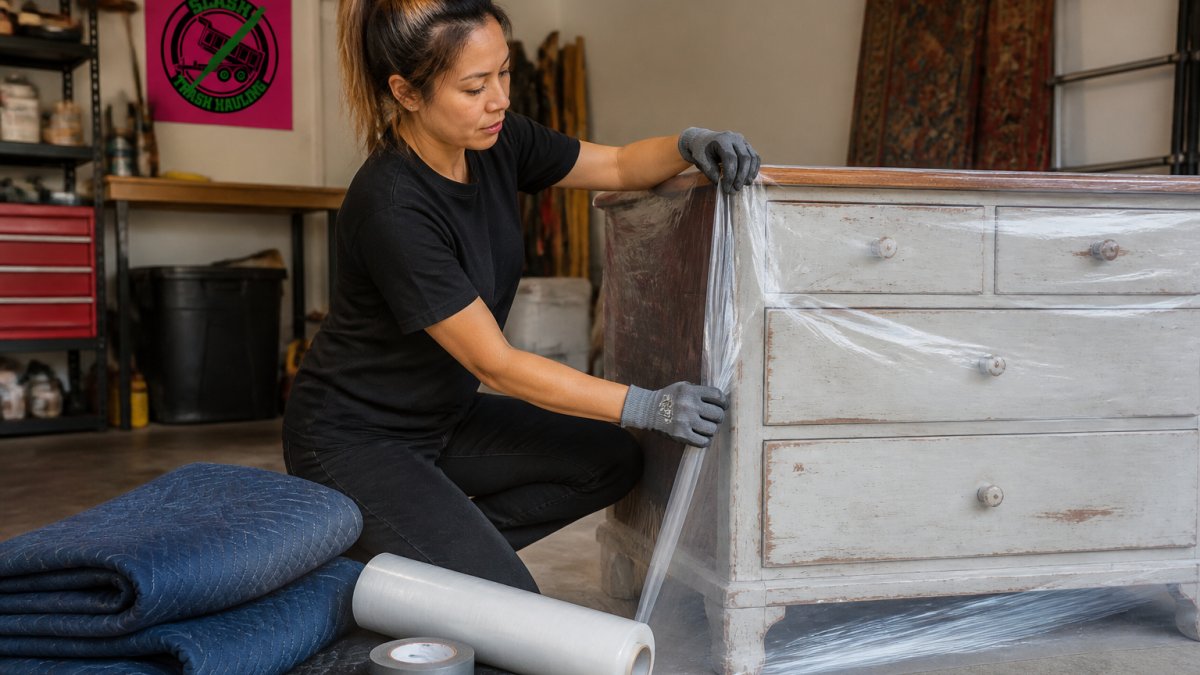
Here is how we would prep a piece:
- Put on nitrile gloves and a fitted mask
- Lay down a plastic drop cloth under the piece
- Wrap peeling edges with plastic sheeting and tape
- Cover the whole piece with a moving blanket or stretch wrap
- Wipe nearby floors with a damp cloth afterward
- Wash hands and change clothes when done
Don't break the piece down to fit it in a car. That is where most people create a dust problem. Keep it whole and let a crew load it.
Call or Text for a Free Quote →
San Jose Lead Paint Disposal Rules You Should Know
San Jose lead paint disposal rules follow California and county guidance, and the short version is this: painted furniture is not regular curbside trash. Santa Clara County residents can take household items to county drop-off sites, but you should confirm current acceptance rules before you load the car.
A few things to know:
- Curbside pickup programs generally don't accept bulky painted furniture
- County household drop-off sites have their own acceptance lists
- Landlords and property managers must handle tenant-discarded painted furniture with the same care
The California Department of Toxic Substances Control household hazardous waste guidance and Santa Clara County household hazardous waste program are the places to confirm what your local site takes and when it's open.
If you're unsure, call ahead. A two-minute phone call saves a wasted trip across town.
Step-by-Step: Disposing of Furniture With Lead Paint
Disposing of furniture with lead paint safely takes about an hour of prep for one piece. Follow these steps in order.
- Identify the piece. Check age and paint condition. Assume pre-1978 painted furniture is suspect.
- Test the paint. Use a swab or lab sample on each painted area.
- Decide the route. Positive test means you need a proper drop-off or a hauling crew, not the curb.
- Wrap it up. Gloves, mask, drop cloth, plastic sheeting, tape, and a blanket.
- Clear the path. Move cars, open gates, and protect floors along the carry route.
- Book pickup or drop-off. Call the county site or schedule a hauling crew.
- Load it whole. Two people, no smashing, no dragging across finished floors.
- Clean up. Damp-wipe the area and wash up.
When to Call a Hauling Crew for Lead-Painted Furniture
Some jobs are fine to handle yourself. Others are worth handing off.
Call a hauling crew when:
- You have several painted pieces, not just one
- The furniture is heavy or awkward, like a wardrobe or piano-style cabinet
- Stairs, tight hallways, or limited driveway access make carrying risky
- You're clearing an estate and don't know what's painted
- You want it gone today without the drop-off trip
This is where we come in. Slash Trash Hauling offers same-day and next-day pickup across San Jose and the valley. We wrap and carry pieces whole, and we give free quotes by phone, text, or photo. One customer, Erin M., put it this way on Yelp: "Same-day service, kind, professional, and efficient. Great value!"
If you're searching for furniture hauling near me, we're local, woman-owned, and we answer the phone. No hidden fees, no surprise add-ons.
Frequently Asked Questions
How can I tell if old furniture has lead paint?
Start with the age. Furniture made or painted before 1978 has a real chance of carrying lead paint, since lead was common in household paint until it was restricted that year. Look for chalky residue, alligator cracking, or paint that chips off in flakes. A home test kit or a swab from a certified lab gives you a firm answer. When in doubt, treat the piece as lead-painted and keep it out of the regular trash.
Can I put furniture with lead paint in the trash in San Jose?
Curbside trash pickup is not the right route for lead-painted furniture. Chipping paint can shed lead dust during collection and crushing, and Santa Clara County haulers are not set up to take it that way. Keep the piece out of your regular bin, wrap or bag it if paint is flaking, and use a household hazardous waste drop-off or a hauling company that knows how to route it properly.
Should I sand or strip furniture that may have lead paint?
No. Sanding, scraping, or chemical stripping a piece that may contain lead spreads fine dust that is easy to breathe in and hard to contain. Leave the surface intact, seal any peeling edges with tape or plastic, and move the piece out whole. If a piece is a family heirloom you want to keep, talk to a certified lead-safe contractor before anyone touches the surface.
Can a junk removal company haul furniture with lead paint?
A hauling company can remove the piece from your home and route it to the correct disposal point, but tell them upfront that lead paint is suspected so they can plan for it. At Slash Trash Hauling, we handle furniture, appliances, and cleanout debris across San Jose and Santa Clara County. Text a photo to 408-833-5405 for a free quote and we will confirm how the piece should be handled.
Old painted furniture is one of those jobs that feels small until dust gets everywhere. The safe path is simple: test it, wrap it, keep it whole, and use a route that accepts it. If you'd rather hand it off, Slash Trash Hauling can schedule a same-day or next-day pickup, wrap and carry the piece whole, and quote you free by phone, text, or photo. Call or text 408-833-5405 and let us slash the mess and reduce the stress.