 how-to
Hiring Reliable Junk Removal Services: 2026 Guide
Table of Contents
- Why Hiring Reliable Junk Removal Services Matters in 2026
- The Junk Removal Company Checklist Every Homeowner Should Use
- How to Get a Junk Removal Estimate Without Surprise Fees
- What Items Do Junk Removal Companies Take (and What They Won't)
- Finding a Furniture Removal Service Near Me: Local vs National
- Reviews, References, and Reliability Signals That Actually Matter
- Conclusion: Booking a Hauler You Can Trust
- Frequently Asked Questions
Last Updated: October 17, 2026
Why Hiring Reliable Junk Removal Services Matters in 2026
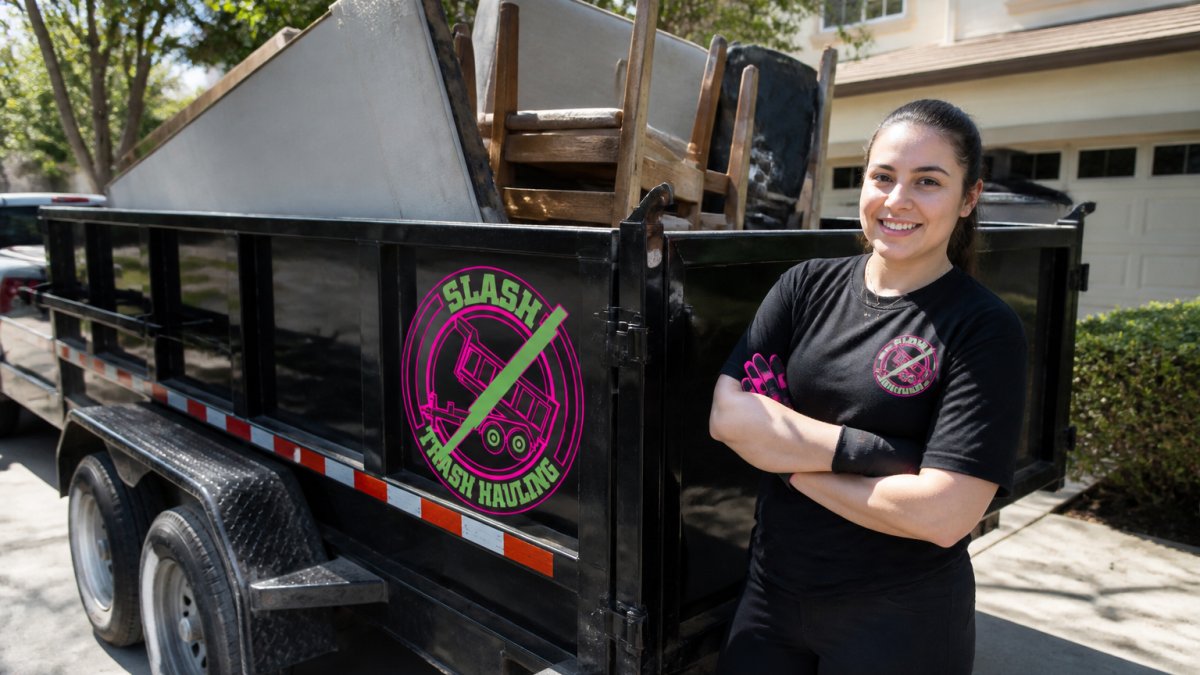
Professional junk removal costs an average of $241, and labor alone typically runs $100 to $300, according to Angi's 2026 junk removal cost data. That is real money, which is exactly why hiring reliable junk removal services matters more than ever. The U.S. junk removal industry generated $10.7 billion in revenue in 2023, per Gitnux's junk removal industry statistics, and 68% of consumers have used a junk removal service at least once. At Slash Trash Hauling, we serve homeowners, landlords, and contractors across San Jose, CA.
A bad hauler leaves your couch on the curb, pockets the deposit, or dumps debris in a lot somewhere. A good one shows up on time, quotes you fairly, and hauls everything to the right facility.
Below, we break down how to vet a hauler, what a junk removal estimate should include, and the red flags that separate a pro from a problem.
The Junk Removal Company Checklist Every Homeowner Should Use
The fastest way to separate a real operation from a guy with a truck is a short checklist. A junk removal company checklist covers licensing, insurance, permits, and the paper trail that protects you if something goes wrong.
Run through these before you book:
- Ask for the company's business license number and verify it
- Request a certificate of insurance for liability and workers' comp
- Confirm who handles dumpster or right-of-way permits
- Get the quote in writing, including any fees
- Ask where the debris actually ends up
- Check that the truck and crew look professional on arrival
Licensing, Insurance, and Dumpster Permits
Licensing is the legal registration that lets a hauler operate as a business in your state. Insurance covers damage to your property and injuries to workers on your job.
If a crew damages your driveway or a worker gets hurt on your property, uninsured haulers leave you holding the bill. Ask for proof before pickup day, not after.
Red Flags That Signal an Unreliable Hauler
The biggest mistake we see is booking on price alone. Watch for these warning signs:
- Demands cash upfront with no receipt
- Quotes a price over the phone without seeing the load
- Cannot name the landfill or transfer station they use
- No business license, no insurance, no website
- Pressure to book "today only" at a discount
How to Get a Junk Removal Estimate Without Surprise Fees
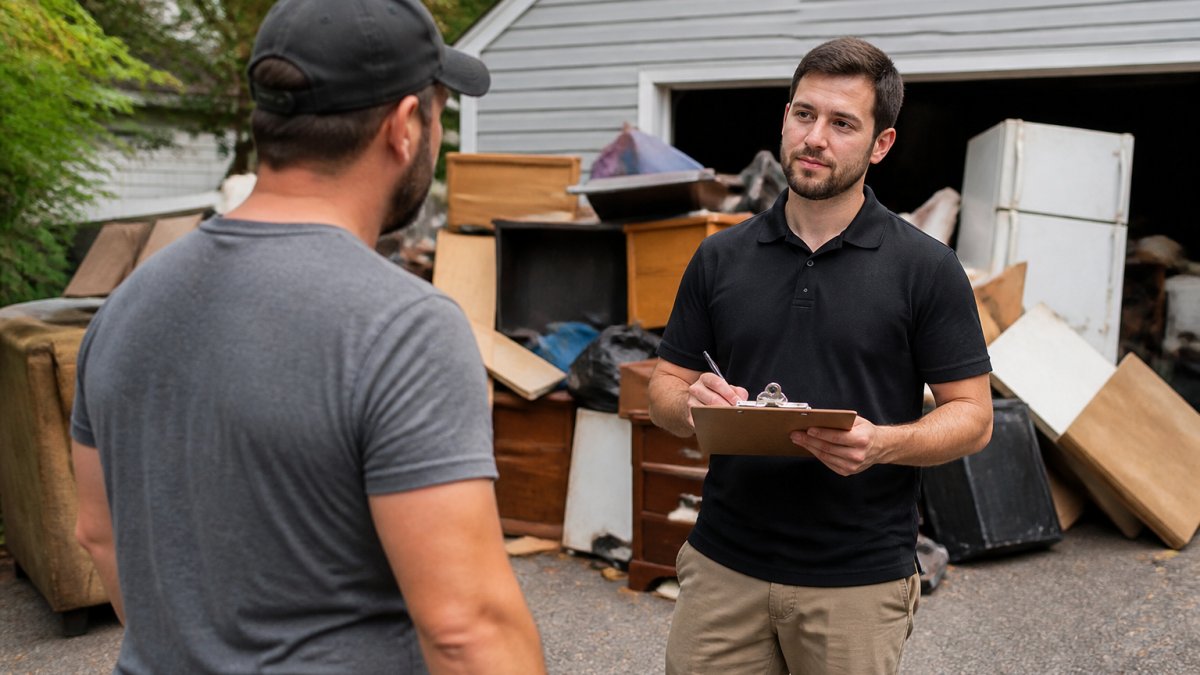
A junk removal estimate should be free, and it should be based on seeing your actual load. Reputable companies quote on volume, weight, and labor, not a flat guess over the phone.
Here is how a fair estimate works:
- Describe your items by photo or video, or request an on-site visit
- Get a written range based on volume (quarter, half, or full truck)
- Confirm what is included: labor, hauling, disposal, and any special-item fees
- Lock the price before the crew starts loading
What Drives the Final Price on Pickup Day
Disposal fees typically range from $50 to $100 per ton, according to Angi's cost breakdown, and that fee is baked into most quotes. Heavy materials like concrete, dirt, and shingles cost more to dump than a sofa.
The main price drivers are:
- Volume: how much space your items take in the truck
- Weight: dense debris costs more at the scale
- Access: stairs, long carries, and tight gates add labor
- Special handling: appliances, electronics, and hazardous items
What Items Do Junk Removal Companies Take (and What They Won't)
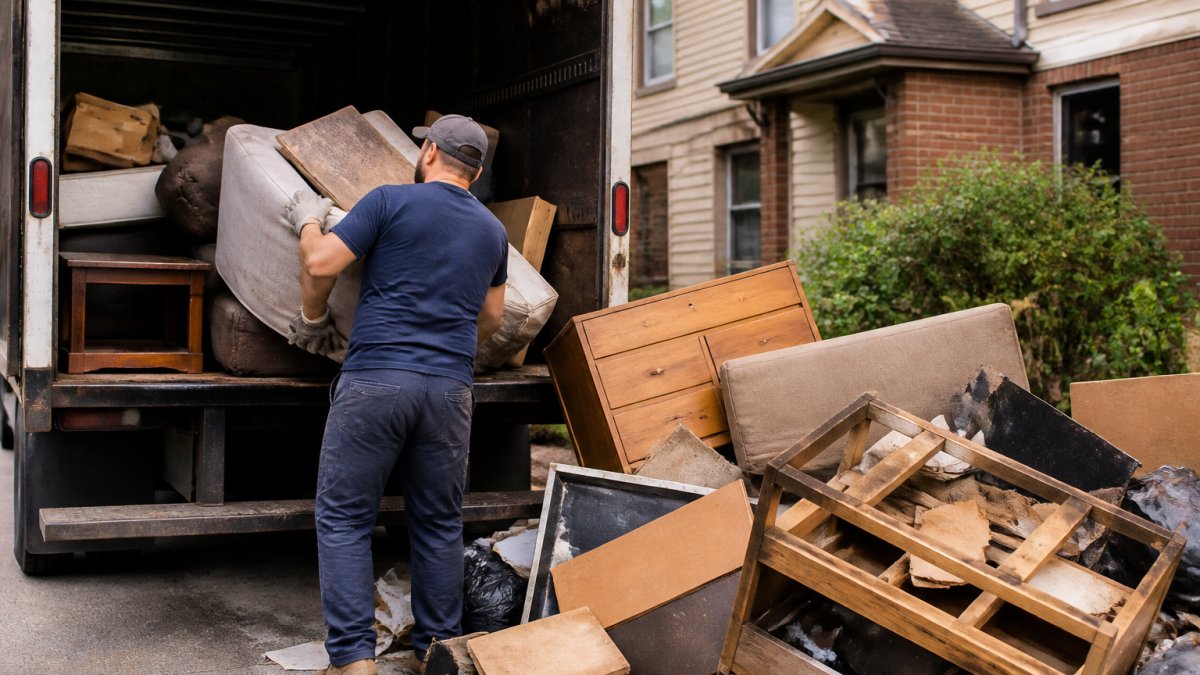
Most junk removal companies take furniture, appliances, mattresses, yard waste, and construction debris. What they will not take is anything classified as hazardous household waste, which requires special disposal.
Here is a quick reference:
| Item Type | Accepted? | Notes |
|---|---|---|
| Sofas, mattresses, tables | Yes | Standard furniture hauling |
| Refrigerators, AC units | Yes | Freon recovery may apply |
| Yard waste, branches | Yes | Volume-based pricing |
| Concrete, dirt, shingles | Usually | Heavier, priced by weight |
| Paint, solvents, motor oil | No | Hazardous waste |
| Asbestos, lead paint debris | No | Requires certified abatement |
If you are dealing with an estate cleanout and suspect lead paint or asbestos, that material needs a licensed abatement contractor first. A hauler can remove the rest once the hazardous material is cleared.
Finding a Furniture Removal Service Near Me: Local vs National
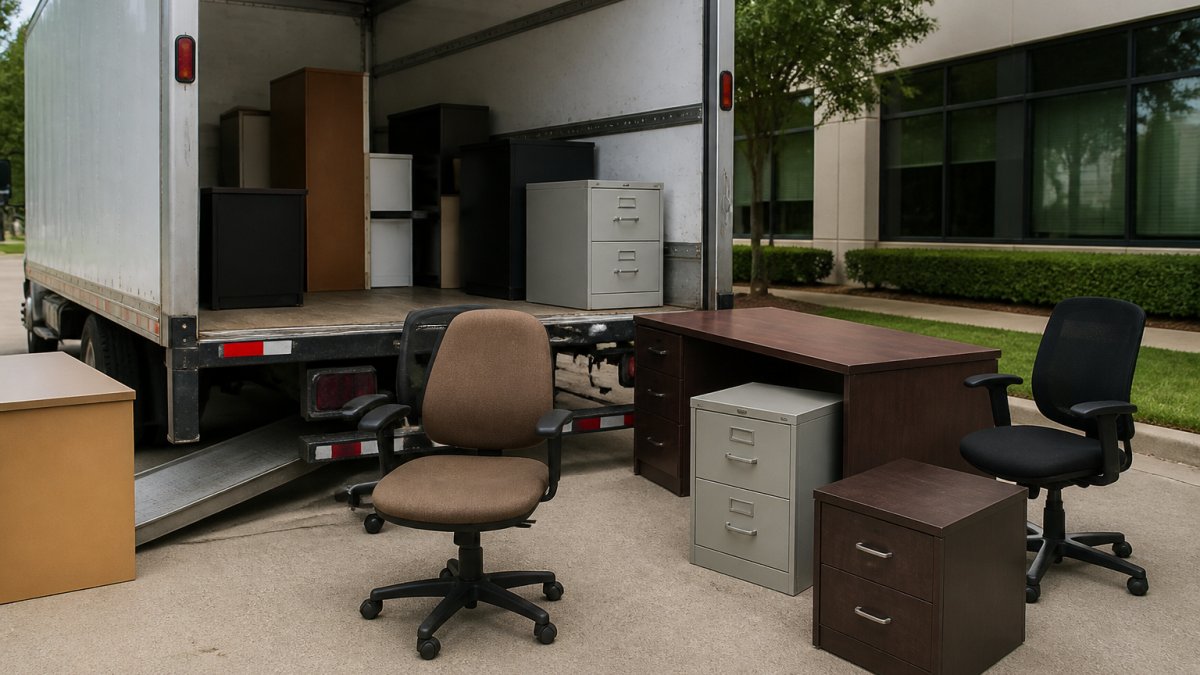
Searching for a furniture removal service near me usually turns up two options: a national franchise or a local hauler. Local companies often offer scheduling flexibility and knowledge of the area.
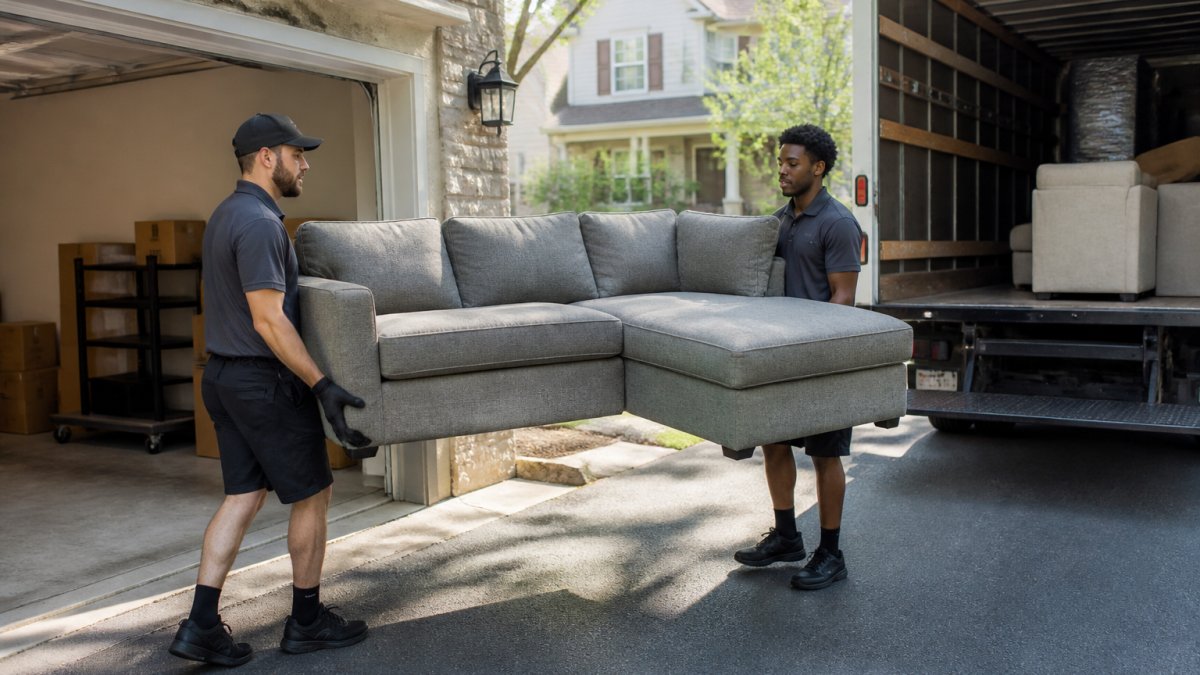
National brands bring consistent branding and call centers. Local haulers bring direct communication and crews who know which San Jose transfer stations take what.
For tight-access properties, ask upfront whether the truck can reach your items.
Reviews, References, and Reliability Signals That Actually Matter
Online reviews are useful, but the details matter more than the star rating. Look for reviews that mention on-time arrival, final price versus quote, and how the crew handled problems.
Reliability signals to check:
- Recent reviews (last 6 months), not just old ones
- Photos of completed jobs
- A real phone number and physical address
- Willingness to provide references on request
- Clear communication before, during, and after the job
A hauler with 40 detailed reviews beats one with 400 generic five-star ratings. Read the middle reviews, the three- and four-star ones, because they usually tell you where a company is weak.
Conclusion: Booking a Hauler You Can Trust
The challenge is simple: most homeowners and landlords do not have time to vet five haulers before a move-out or estate cleanout. The fix is to use the checklist, demand a written estimate, and pick a company that answers the phone and shows up.
Slash Trash Hauling removes unwanted furniture, appliances, and demolition scrap debris for homeowners, landlords, and contractors across San Jose, CA. We quote from photos, confirm pricing before we load, and haul everything to the right facility. Get an estimate from Slash Trash Hauling and clear the space without the guesswork.
Frequently Asked Questions
How do I choose a reliable junk removal service in San Jose?
Start with a written checklist: confirm the company is licensed and insured, ask for a written estimate before pickup day, and read recent reviews on Google and Yelp. Ask whether the crew wears uniforms and drives a branded truck, since that signals a real operation rather than a fly-by-night hauler. Get the quote in writing and confirm whether the price includes disposal fees. A reputable company will answer all of this without hesitation.
How much does junk removal cost in San Jose, CA?
National data from Angi's 2026 cost report puts average professional junk removal at about $241, with labor typically running $100 to $300 and disposal fees of $50 to $100 per ton. Local pricing depends on volume, item type, and access, so ask for a free on-site or photo-based estimate. Slash Trash Hauling provides quotes based on what you actually have, so you know the price before the truck arrives.
Do junk removal companies provide upfront estimates?
Most reliable haulers offer estimates, either on-site or from photos you text in. A junk removal estimate should list what is included: labor, disposal fees, and any surcharges for heavy items like appliances or mattresses. If a company refuses to put a number in writing or only quotes over the phone without seeing the load, treat that as a warning sign and keep looking.
What items can a junk removal service take?
Standard junk removal covers furniture, appliances, mattresses, yard waste, e-waste, and construction debris. Refrigerators and AC units are accepted but often carry a small surcharge because of refrigerant handling. Items most haulers cannot take include paint, motor oil, tires, and asbestos-containing materials, which require hazardous waste disposal. Ask what items do junk removal companies take before booking so nothing gets left behind.