 blog
1-800-GOT-JUNK Alternatives for Residential Junk Removal
Table of Contents
- Why Homeowners Look Beyond 1-800-GOT-JUNK
- Junk Removal Cost Comparison: What You'll Actually Pay
- Full-Service Hauling vs. Curbside Junk Removal
- Furniture Removal Service: What to Expect
- How to Compare Junk Removal Quotes Like a Pro
- Residential Junk Removal for Different Job Types
- Residential Junk Removal Partner Selection
- Frequently Asked Questions
Last Updated: October 6, 2026
Why Homeowners Look Beyond 1-800-GOT-JUNK
National brands dominate search results, but that doesn't make them your best option. More homeowners are exploring junk removal alternatives residential options for better pricing, faster scheduling, or a provider who knows their neighborhood.
We've worked with homeowners in Stanislaus, Merced, and San Joaquin counties who first contacted the national chains. They found premium pricing, limited scheduling flexibility, and crews unfamiliar with local access challenges.
According to research on generational property transfers, homeowners increasingly want meaningful disposal of possessions rather than simply clearing volume. That shift changes what matters: reliability, transparency, and knowing your items go somewhere useful, not just a landfill. The best junk removal service for your situation depends on three factors: load size, labor needs, and what happens to your stuff afterward.
Junk Removal Cost Comparison: What You'll Actually Pay
Most residential junk removal quotes stack four components, and the headline price online usually reflects only the first. Here's the structure most full-service haulers use, and the questions that expose what a quote includes.
1. Minimum charge (the base fee). Nearly every full-service hauler has a minimum, because rolling a truck costs the same whether you have one item or a garage full. A provider advertising "from $99" is usually quoting that minimum, not your job.
2. Volume tier (truck fractions). Haulers price by how much of the truck your items fill, not item count.
3. Labor and access surcharges. Stairs, long carries, tight doorways, elevators, and disassembly add time, the variable most likely to move your final bill.
4. Disposal and specialty fees. This is where the biggest quote gaps hide.
What a like-for-like residential comparison looks like
When you line up three quotes, normalize them to the same job description first. Write down the item list, location in the home (floor, distance to truck), and any specialty items, then ask each provider to quote that exact scope. Realistic ranges for common residential jobs:
These are ranges, not quotes. Local labor rates, tipping fees, and fuel costs vary, so the same job can price differently two towns over.
The hidden-cost checklist
Before you accept any quote, confirm each of these in writing:
- Is the minimum charge waived or credited if the job exceeds a certain volume?
- Are stairs, elevators, or long carries included, or billed per flight/per 50 feet?
- Is there a separate fee for refrigerant appliances, TVs, tires, or mattresses?
- Is construction debris accepted, and is it priced by volume or by weight?
- What is the cancellation or same-day rescheduling policy, and is there a no-show fee?
- Does the quote include the disposal fee, or is that added at the scale?
Why the cheapest quote often isn't
A low quote can mean a smaller truck (so your "half load" is really a full load), a landfill-only disposal path, or an uninsured crew. A high quote can mean the provider bundles recycling, donation coordination, and certified appliance handling.
Full-Service Hauling vs. Curbside Junk Removal
The choice between full-service hauling and curbside junk removal comes down to labor and convenience. Full-service means a crew loads everything from inside your home, hauls it away, and leaves your space clean. Curbside means you move items to the curb or driveway for pickup.
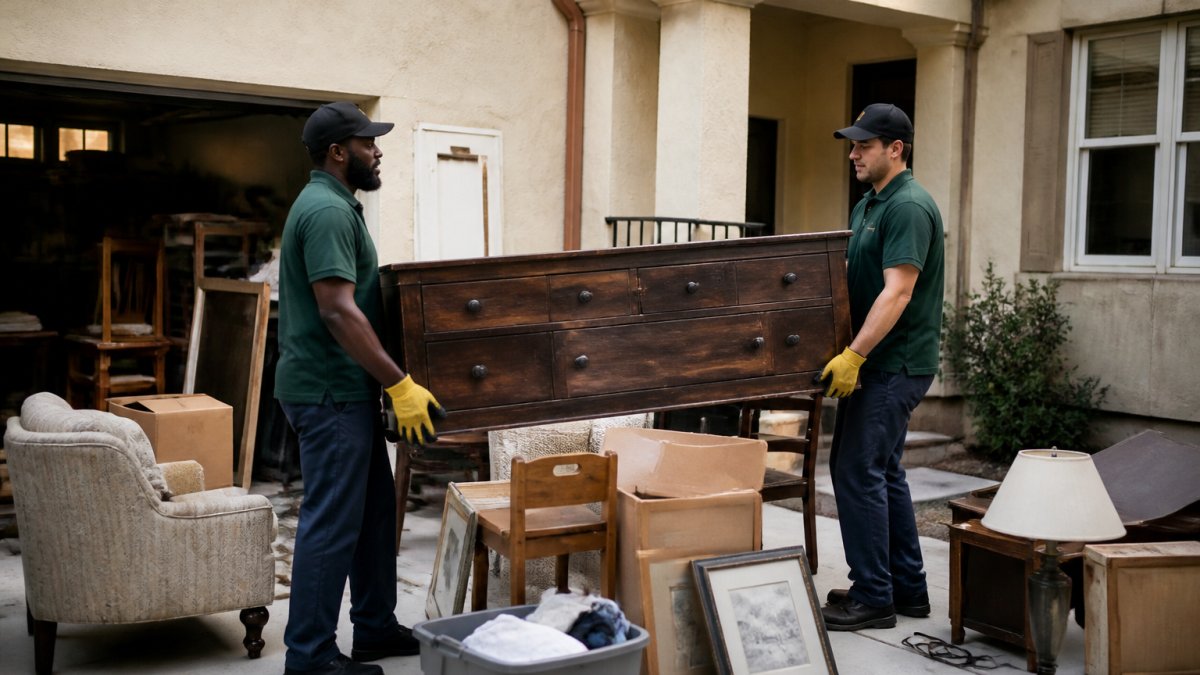
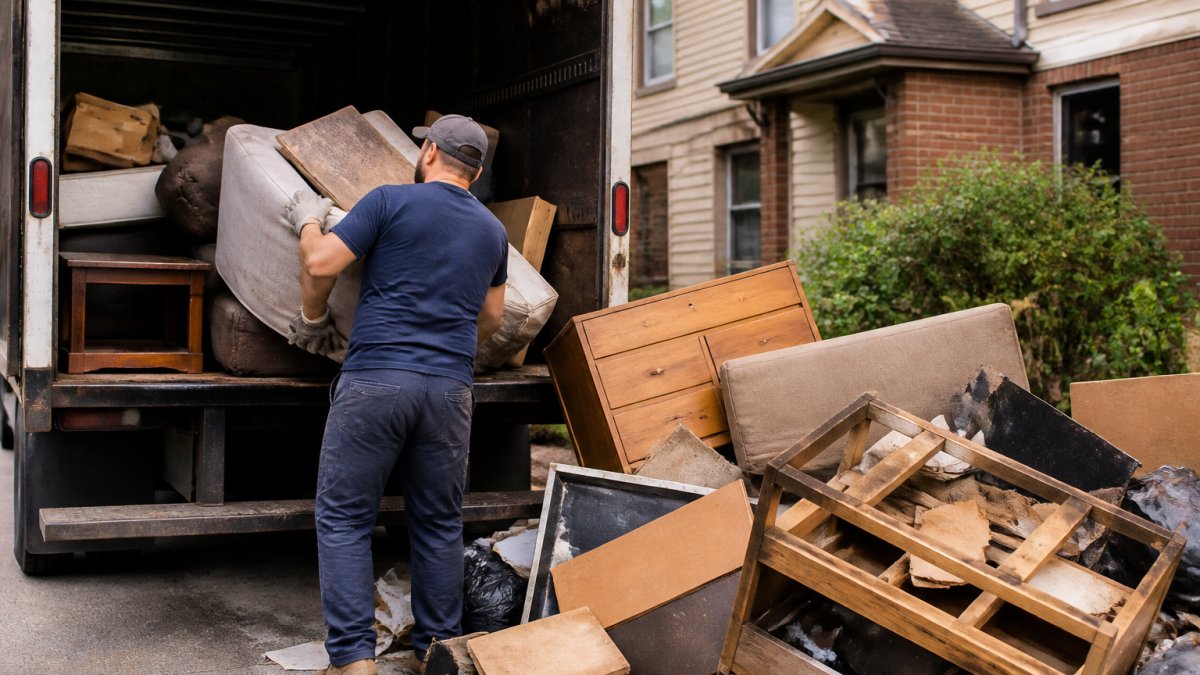
Full-service hauling works best for large cleanouts, estate sales, or mobility limitations. The crew handles all the heavy lifting, pulling furniture from upstairs, breaking down bulky items, and navigating tight spaces. You pay more, but your time and physical effort drop to zero.
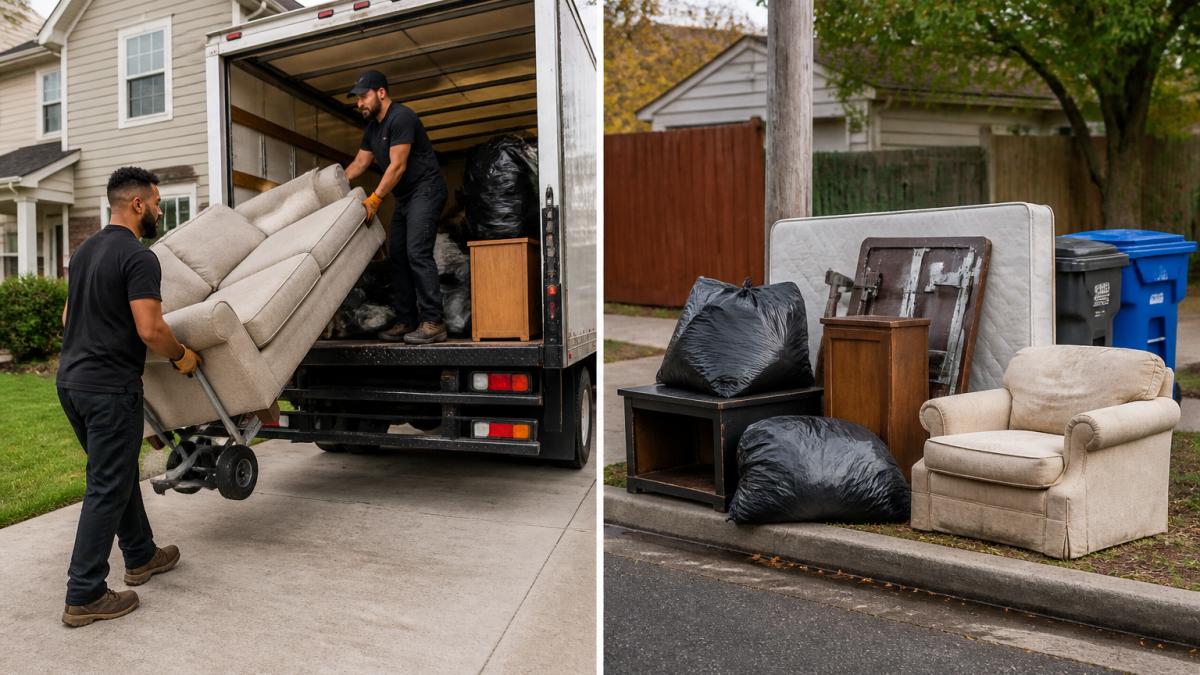
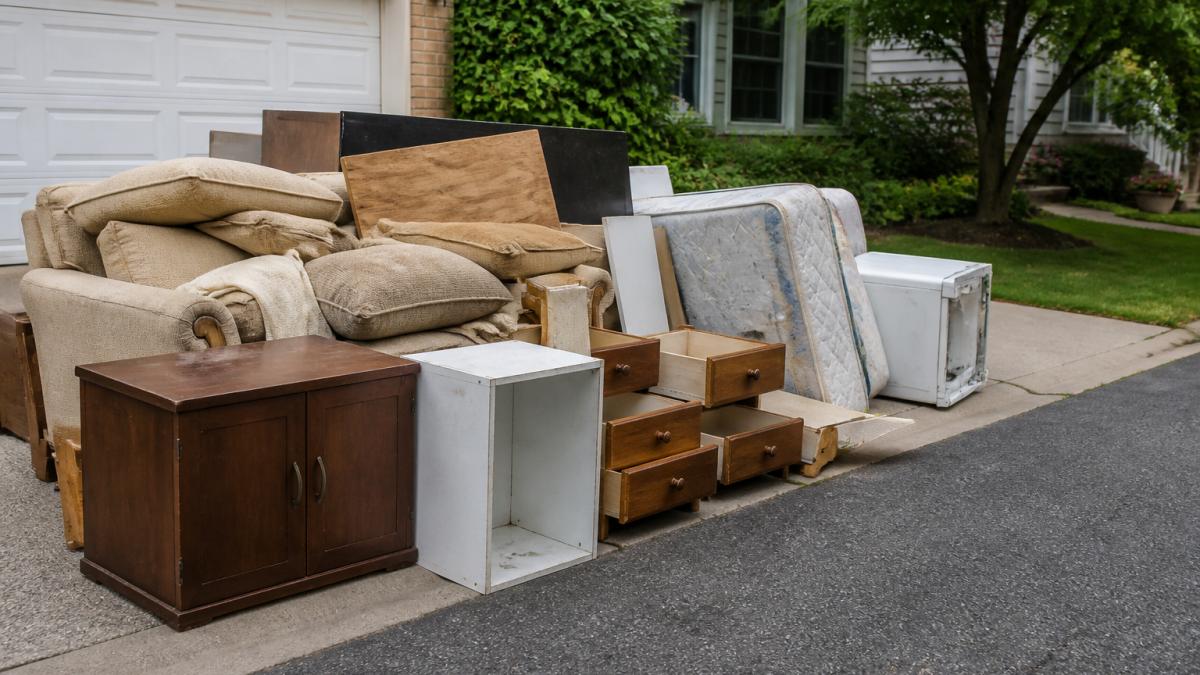
Curbside junk removal requires you to do the prep work: haul items outside, stage them for pickup, and the service collects them. It's typically 40-50% cheaper than full-service but demands your time and effort.
The real difference: full-service hauling is a service you pay for; curbside is a pickup you arrange. If your property has limited access, a truck can't reach your backyard, or items are in a second-floor bedroom, full-service becomes the only option.
Furniture Removal Service: What to Expect
Furniture removal service handles the challenge of getting large, awkward items out safely. A couch, dining table, or dresser isn't just heavy, it's bulky and hard to maneuver through doorways, down stairs, or around corners. Professional service includes assessment, safe extraction, and responsible disposal or donation.
When you call, describe the items: size, condition, and location (upstairs, basement, etc.). Quality providers partner with local nonprofits or recycling centers to divert usable furniture from waste streams.
The process typically takes 30-60 minutes for a single room's furniture. Difficult locations, like a couch stuck in a basement stairwell, take longer and may require partial disassembly, but professional crews have the tools to remove items without damaging walls, floors, or the furniture.
Pricing depends on the number of pieces, their size, and removal difficulty.
How to Compare Junk Removal Quotes Like a Pro
Comparing junk removal quotes requires the right questions. A low headline price means nothing if the final bill includes hidden fees. Here's how to evaluate quotes side by side.
Get three quotes minimum. Contact at least one national provider, one regional company, and one local option for pricing anchors and measurable service differences.
Ask these specific questions:
- Is this an all-inclusive quote, or are there add-on fees for appliances, hazmat, or difficult access?
- How quickly can you schedule? (Same-day, next-day, or weekly availability?)
- What happens to items? Are they recycled, donated, or landfilled?
- Is there a minimum charge, and does it apply to smaller jobs?
- Can you handle hazardous materials (refrigerators, AC units, old electronics)?
Request an on-site estimate. Phone quotes are guesses. A crew that visits sees the actual job, stairs, narrow hallways, and property access, and gives an accurate price. Reputable providers offer free estimates.
Compare apples to apples. Don't pit a $150 quote against a $300 quote without understanding why. The cheaper option might exclude appliance removal or donation logistics. The expensive one might include recycling and responsible disposal.
Check reviews for follow-through. Read what past customers say about scheduling reliability and whether the final bill matched the quote. A company that consistently charges more than estimated is a red flag.
| Comparison Factor | What to Look For | Red Flag |
|---|---|---|
| Quote Accuracy | Final bill within 10% of estimate | Surprises or add-on fees not mentioned upfront |
| Scheduling | Available within 48 hours | Weeks-long wait times or cancellations |
| Appliance Handling | Explicit yes for refrigerators, AC units, electronics | Vague answers or "we'll figure it out on-site" |
| Disposal Method | Clear explanation (donation, recycling, landfill) | No answer or "we handle it" without details |
| Access Flexibility | Can work with property constraints | Refuses jobs with limited truck access |
Residential Junk Removal for Different Job Types
Most guides sort jobs by size and stop there.
Single item or a handful of items (curbside pickup, donation, or municipal collection)
If you have one couch, one mattress, or a few bags, the cheapest path is often not a hauling company.
Room cleanout (full-service hauling or a small dumpster)
A bedroom, home office, or garage cleanout usually fills a quarter to half of a hauling truck. Full-service hauling makes sense when items are upstairs, in a basement, or too heavy to move yourself.
Whole-home or estate cleanout (full-service hauling, often multi-load)
An estate cleanout, foreclosure turnover, or downsizing move generates far more than one truckload and mixes furniture, appliances, personal items, and paperwork.
Renovation or construction debris (dedicated debris hauler or roll-off dumpster)
Drywall, lumber, concrete, roofing, and tile are not household junk. They're heavy, often priced by weight at the transfer station, and many household haulers won't accept them.
Appliances, electronics, and hazardous items (specialty disposal)
Refrigerators, freezers, and AC units contain refrigerant that must be recovered by a certified technician before disposal. TVs, monitors, and other electronics are restricted from landfill in many states and require recycling.
How to pick the right channel in under five minutes
Ask yourself three questions:
- Can I move the items to the curb or driveway myself, safely? If yes, curbside pickup, donation, or a small dumpster is on the table. If no, you need full-service labor.
- Is anything restricted (refrigerant, electronics, paint, tires, construction debris)? If yes, confirm the provider accepts it and the per-item fee.
- Do I want items donated or recycled, and can I verify it? If yes, ask for disposal documentation before you book.
A note on scheduling and access
Job type also drives scheduling.
Residential Junk Removal Partner Selection
Choosing the right residential junk removal partner is about more than price. Reliability, local knowledge, and transparency matter most when clearing your home or managing a rental property.
Look for providers with local reviews mentioning scheduling reliability and accurate quotes. Check that they're licensed and insured, which protects you if someone is injured on your property or items are damaged.
Ask about disposal partnerships. Do they work with local nonprofits for furniture donation? Recycle electronics responsibly? Have relationships with construction debris facilities?
For property managers and contractors, ask about volume discounts and standing relationships. A reliable partner who understands recurring needs, turnover cleanouts, and renovation debris becomes a trusted vendor rather than a one-time transaction.
Slash Trash Hauling serves Stanislaus, Merced, and San Joaquin counties with transparent pricing, flexible scheduling, and a commitment to responsible disposal. We handle residential furniture removal, appliance pickup, construction debris, and full-property cleanouts.
Clearing junk from your home shouldn't mean overpaying for national-brand premium pricing or waiting weeks for an appointment. Local providers with strong reputations, transparent quotes, and flexible scheduling often deliver better value and faster service.
Frequently Asked Questions
What are the main alternatives to 1-800-GOT-JUNK for residential junk removal?
Homeowners have several options beyond full-service haulers: municipal bulk pickup programs, donation services, dumpster rental, self-hauling, and local junk removal companies. Each model works differently. Full-service providers handle loading and disposal for you. Curbside pickup requires items at the curb. Dumpster rental gives you time to fill it yourself. Municipal programs are often free but have strict schedules and item limits. The best choice depends on your load size, labor availability, and budget.
How much does residential junk removal cost compared with national chains?
Pricing varies widely based on volume, item type, and service model. Full-service haulers typically charge by truckload or volume, while dumpster rental charges a flat fee. Get quotes from multiple services to compare. Ask whether the estimate includes labor, disposal fees, and any surcharges for hazardous items like appliances or old paint. Transparent pricing should be itemized in writing before work begins.
What should I compare when choosing between junk removal options?
Compare these factors: total cost (including all fees), service area coverage, scheduling flexibility, what items are included, whether they handle hazmat disposal, customer reviews on reliability, and how they handle donations or recycling. Ask if there's a minimum charge and what happens if you're not sure of your load size. Check whether they're licensed and insured, especially for construction debris or estate cleanouts. Transparent communication about what's included prevents surprises on pickup day.
Do junk removal companies pick up furniture and appliances?
Most full-service junk removal companies handle standard furniture and appliances. However, some items carry extra fees or restrictions: refrigerators, air conditioners, and other items with refrigerants may require certified hazmat disposal. Old paint, batteries, and electronics sometimes cost more to process. Ask the company upfront whether your specific items are included in their base price or if they charge separately. Some services offer free appliance pickup if they can resell or recycle them, while others charge a disposal fee.