 how-to
Best Ways to Clear Garage Clutter: A Step-by-Step Guide
Table of Contents
- Prepare Your Space and Set a Schedule
- Sort Items Into Keep, Donate, Sell, and Discard Categories
- Create Your Garage Decluttering Checklist
- How to Dispose of Old Appliances and Hazardous Materials
- Maximize Vertical Space and Install Storage Solutions
- Understanding Junk Removal Services Cost and When to Call a Professional
- Maintain Your Cleared Garage and Prevent Future Clutter
- Frequently Asked Questions
Last Updated: October 3, 2026
Prepare Your Space and Set a Schedule
To clear garage clutter effectively requires a plan, timeline, and realistic expectations. Preparation, not action, is where success begins.
Set aside dedicated time for this project. Most homeowners can tackle a basic garage decluttering in a weekend, but larger spaces may take 2-3 weekends spread across a month. According to professional organization community guidance, the recommended frequency for garage cleaning and reorganization is every 3-6 months to prevent clutter from accumulating again.
Choose your method: empty the entire garage at once, or work section by section (better if you need to keep vehicles parked). Pick a starting corner and work systematically across the space.
Schedule during mild weather and notify family members of your timeline so they don't add items during the project.
Sort Items Into Keep, Donate, Sell, and Discard Categories
The sorting process is where most garage decluttering succeeds or fails. You need four distinct categories, and you need to be honest about each item. Effective garage decluttering requires a systematic approach to sorting items before reorganizing, according to Good Housekeeping's decluttering methodology.
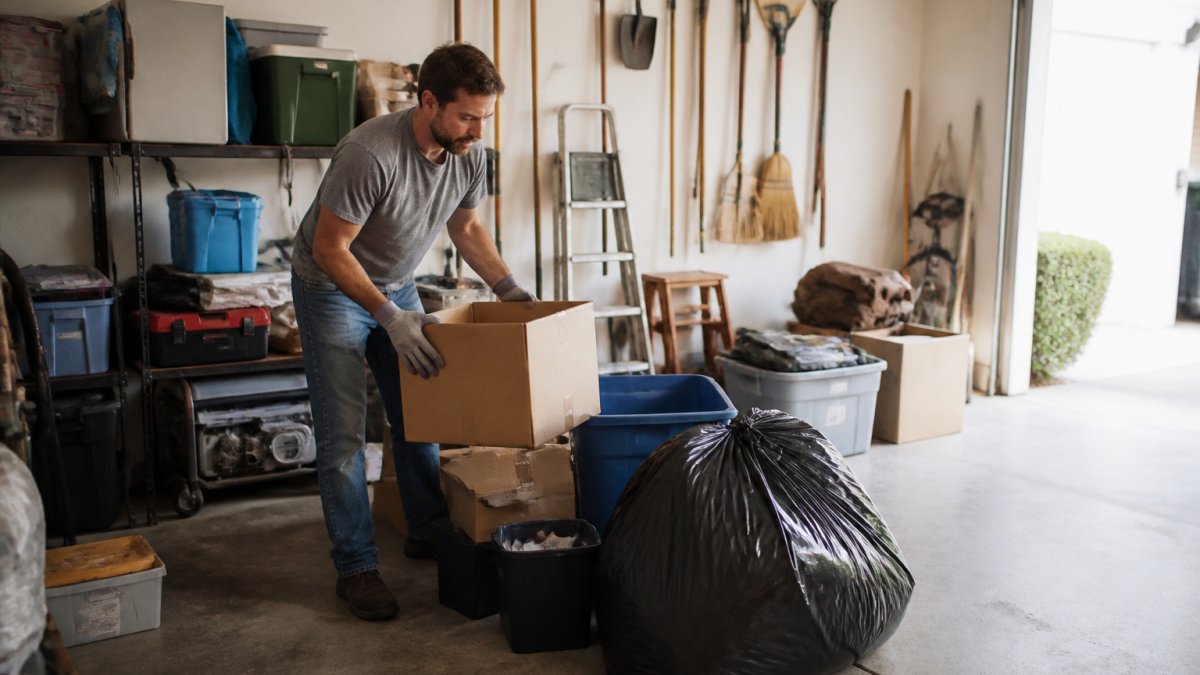
Create four sorting zones in your driveway or yard:
Keep: Items you actually use, tools you reach for regularly, seasonal equipment, sports gear in good condition. If unused for two years with no specific future need, it doesn't belong here.
Donate: Working items you no longer need, unopened paint, decent furniture, stored clothes. You get a tax deduction.
Sell: Items with resale value, vintage tools, working appliances, quality furniture, bicycles. List online or hold a garage sale.
Discard: Broken items, hazardous materials, anything unusable. Disposal costs money and requires planning.
If you hesitate more than 30 seconds on an item, donate or sell it. Speed prevents decision fatigue.
Create Your Garage Decluttering Checklist
A checklist transforms garage decluttering into a trackable process and ensures you don't overlook hazardous materials or dispose of items illegally.
Before sorting, conduct a hazard audit by photographing or noting every item requiring special handling.
Hazardous Materials Audit Checklist:
- Refrigerators, freezers, or window AC units (contain refrigerant; EPA-regulated under 40 CFR Part 82)
- Paint cans, thinners, lacquers, stains (hazardous waste; illegal to landfill or incinerate)
- Batteries: car, rechargeable, or alkaline (contain lead, cadmium, or mercury)
- Electronics: old monitors, printers, circuit boards (contain lead solder and heavy metals)
- Propane tanks, gasoline cans, or oil containers (flammable; explosive if damaged)
- Pesticides, herbicides, or fertilizers (toxic; restricted disposal)
- Fluorescent bulbs or ballasts (contain mercury vapor)
- Asbestos-containing materials: old insulation, floor tiles, roofing (carcinogenic; requires certified removal)
Research local disposal options before sorting. Call your county waste department for collection event dates, drop-off hours, costs, and accepted materials.
Zone-by-Zone Sorting Checklist:
Divide your garage into zones and work one at a time to prevent decision fatigue and show visible progress.
- Zone identified and photographed (before)
- All items sorted into Keep, Donate, Sell, Discard piles
- Hazardous items flagged and set aside
- Floor swept and inspected
- Storage solutions installed if applicable
- Items returned in organized arrangement
- Zone photographed (after)
Logistics Checklist:
- Donation center contacted; pickup or drop-off scheduled
- Items for sale photographed and listed online (Facebook Marketplace, Craigslist, OfferUp)
- Hazardous waste facility or collection event date confirmed
- Junk removal service contacted (if needed for large appliances or volume)
- Recycling bins reserved or scheduled for pickup
- Family members notified of project timeline and "no new items" rule
How to Dispose of Old Appliances and Hazardous Materials
Old appliances and hazardous materials require specific disposal methods, they can't go to the curb.
Refrigerators and freezers contain refrigerant requiring certified removal by federal law.
Air conditioning units contain refrigerant requiring EPA-certified professional disposal. Never attempt removal yourself.
Paint and solvents are hazardous waste. Most communities hold hazardous waste collection events twice yearly.
Batteries and electronics contain heavy metals. Best Buy accepts electronics for recycling; check your local waste authority's website for e-waste collection schedules.
Propane tanks and fuel cans are explosive. Take them to a propane refill station or hazardous waste facility, never leave at the curb.
The national average cost for professional garage clean-out services is $450, according to Angi's 2026 service cost analysis, with typical prices ranging from $200 to $700 depending on the volume and type of items. This often includes hauling away items that require special disposal, which saves you trips and ensures proper handling of hazardous materials.
Maximize Vertical Space and Install Storage Solutions
Once clear, maximize vertical space, most people waste it by stacking items on the floor.
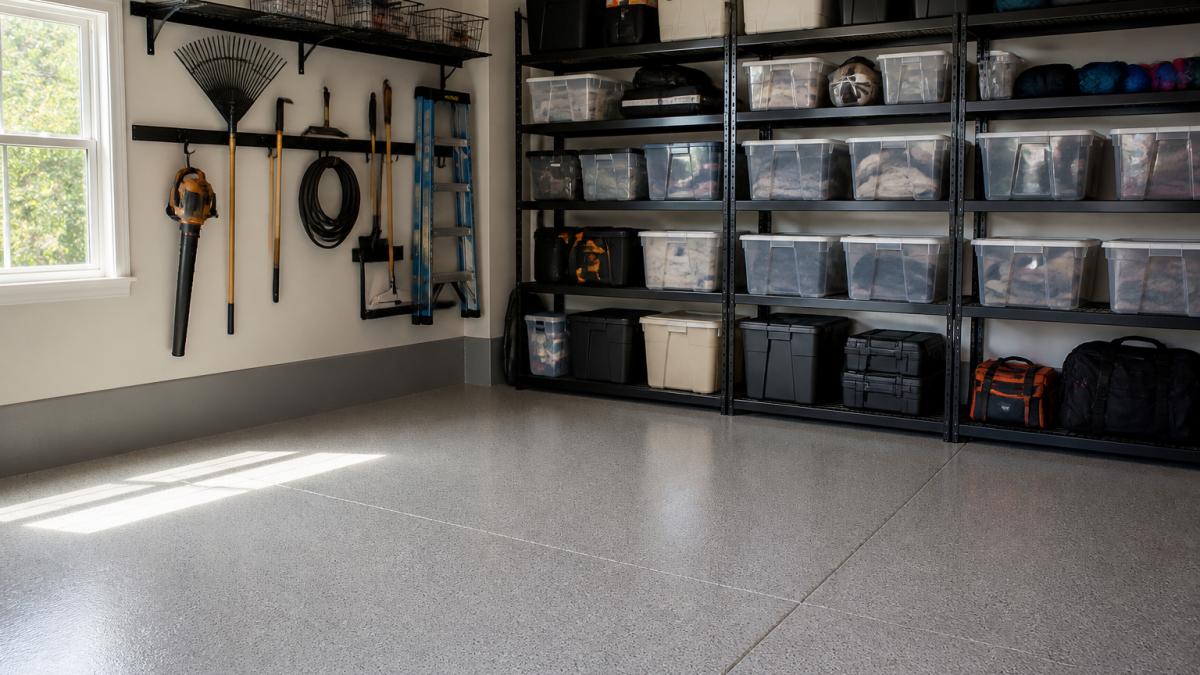
Install wall-mounted storage solutions:
- Pegboards, Affordable and customizable. Add hooks for tools, cords, and small items. Cost: $20-50 per board.
- Wall-mounted rail systems, Heavy-duty and professional-looking. Hold larger items and tools. Cost: $100-300 depending on length.
- Shelving units, Store bins, boxes, and equipment off the floor. Choose freestanding units if you rent. Cost: $50-200 per unit.
- Heavy-duty hooks, Mount directly to studs for hanging bikes, ladders, and cords. Cost: $5-20 per hook.
Use clear, labeled storage containers. You can see what's inside without opening them. Label everything so family members know where items belong.
Vertical storage optimization is an industry trend gaining traction, with increased adoption of wall-mounted rail systems and freestanding open shelving to maximize floor space, according to LeLa Burris's storage solutions analysis.
Keep frequently used items at eye level. Store seasonal or rarely used items higher up. This improves accessibility and safety.
Understanding Junk Removal Services Cost and When to Call a Professional
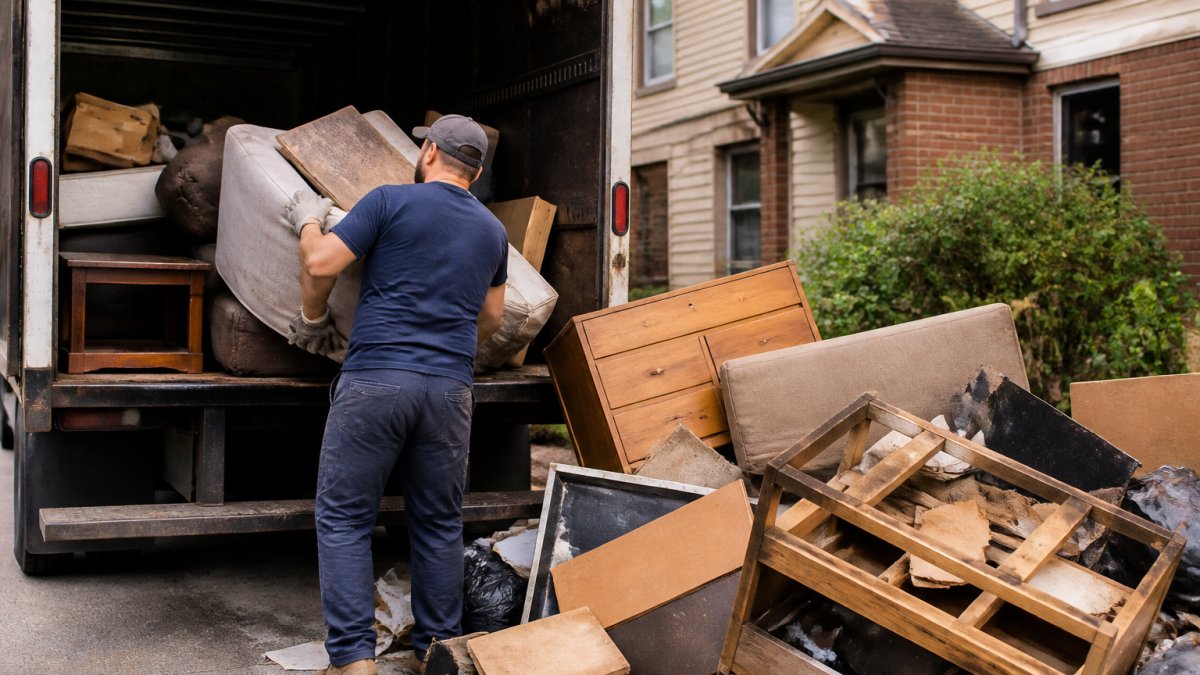
Sometimes hiring professionals is the best way to clear garage clutter, especially with large appliances, hazardous materials, or excessive volume.
Junk removal services handle items you can't dispose of yourself and know proper hazardous material handling.
When to call a professional:
- You have appliances that need refrigerant removal
- Your garage is severely cluttered (more than one truckload)
- You have back pain or physical limitations
- You need same-week or next-day service
- You lack transportation for large items
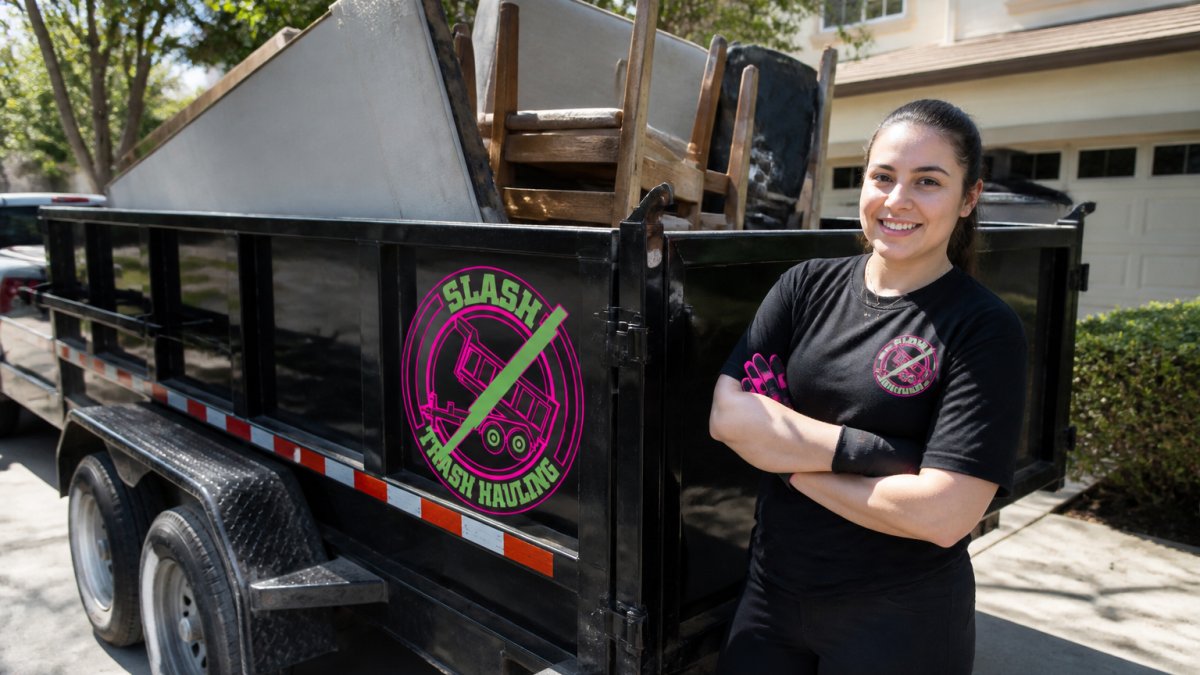
Contact Slash Trash Hauling for an estimate tailored to your specific project and service area needs.
Professional services save time and ensure proper disposal of hazardous materials. They handle the heavy lifting and take everything away in one trip. For rental properties or estate cleanouts, this service is often worth the investment.
Maintain Your Cleared Garage and Prevent Future Clutter
A cleared garage won't stay organized without intentional design and maintenance.
Design Your Garage Zones
Zoning gives every item a designated home and creates visual boundaries.
Common Zone Configurations:
Tool and automotive zone: Pegboards, rail systems, and workbench for maintenance and repairs.
Seasonal zone: Holiday decorations, winter tires, seasonal sports equipment, and lawn care items.
Lawn and garden zone: Lawnmower, trimmer, rakes, shovels, and supplies.
Storage and overflow zone: Infrequently used items and archived documents.
Open floor zone (center of garage): This is sacred.
Assign Everything a Home
Implement the One-In, One-Out Rule
Schedule Quarterly Maintenance
Use Digital Inventory Management for Opaque Bins
Apps like Sortly, Airtable, or even a simple Google Sheet work well. For example:
| Bin Location | Contents | Last Used | Notes |
|---|---|---|---|
| Overhead shelf, back left | Holiday decorations (Christmas) | December 2025 | Lights need testing |
| Seasonal zone, middle shelf | Winter tires (4) | March 2025 | Store in cool, dry area |
| Sports zone, lower rack | Kids' outgrown sports equipment | June 2025 | Donate or sell |
Enforce the "No New Items Without a Plan" Rule
Before anyone brings something into the garage, ask: "Where will this live?
Frequently Asked Questions
What is the fastest way to clear garage clutter?
The fastest approach combines time-blocking with professional help. Set aside 2-3 hour sessions to sort items into categories, then use a junk removal service for bulk disposal. Professional garage clean-out services can eliminate the need to haul items yourself. Focus on clearing the floor space first, then tackle overhead storage and wall-mounted items.
How do I create an effective garage decluttering checklist?
Start with clearing corners and removing cobwebs, then address spills and wall damage (nails and holes). Sort items into four categories: Keep, Donate, Sell, and Discard. Assign zones for different item types, tools, seasonal items, and sports equipment. Label all storage bins clearly and document what's stored where using a digital inventory system. Review and reorganize every 3-6 months to prevent clutter from accumulating again.
How do I handle hazardous items like old refrigerators or AC units?
Refrigerators and air conditioning units contain refrigerants regulated under the Clean Air Act and require certified handling. Never dispose of these items in regular trash. Contact your local waste management facility or hire a professional junk removal service that's equipped to handle hazardous materials safely. Many professionals have the proper certifications and disposal connections to manage these items legally and responsibly.
When should I hire a professional junk removal service instead of doing it myself?
Professional help makes sense when you have large appliances, heavy furniture, construction debris, or hazardous materials. If your garage is severely cluttered, you lack vehicle access for hauling, or you're managing an estate or rental property cleanout, professional services save time and ensure safe disposal of difficult items.