 how-to
Construction Debris Removal for Small Renovations
Table of Contents
- How to Get Rid of Renovation Debris: Pick Your Removal Method
- How to Estimate Renovation Debris Volume Before You Book
- Small Renovation Dumpster Rental: Sizes, Placement, and Timing
- What Construction Debris Removal Cost Actually Includes
- Sorting, Recycling, and Donation Before Pickup
- Safety and Handling Precautions for Renovation Waste
- Frequently Asked Questions
Last Updated: October 7, 2026
How to Get Rid of Renovation Debris: Pick Your Removal Method
Construction debris removal for small renovations comes down to one choice: haul it yourself or pay someone to take it. Most homeowners pick wrong because they compare sticker prices instead of total effort.
A bathroom remodel or a single-room tear-out usually produces more waste than a pickup bed can hold. Drywall, tile, lumber, and old fixtures pile up fast. The right method depends on your volume, your timeline, and how much loading you want to do yourself.
Here are the four main paths:
- Curbside and municipal pickup: free or cheap, but slow and limited in what it takes
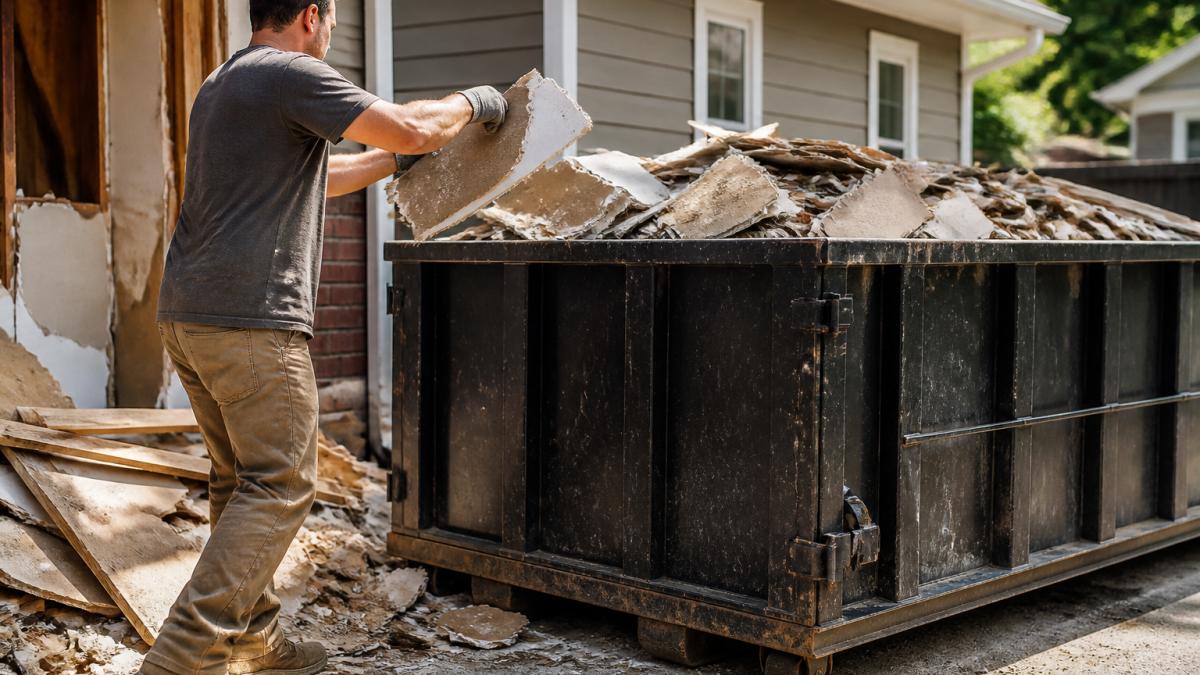
- Dumpster rental: a roll-off container dropped at your curb for a set rental period
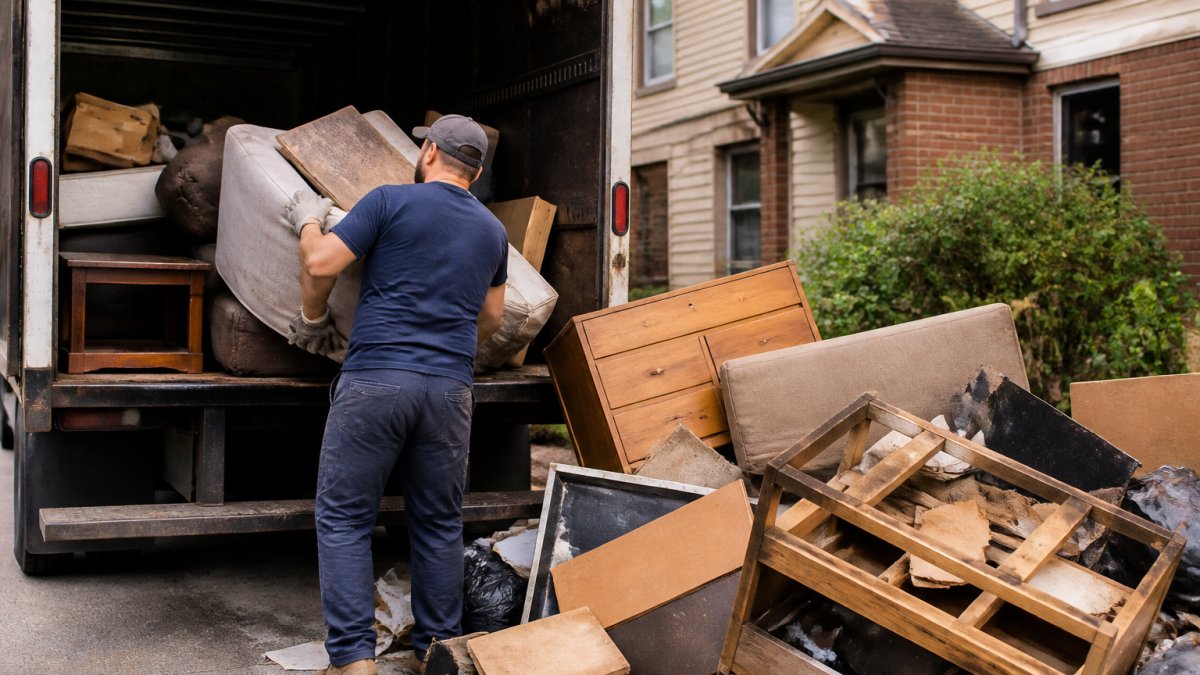
- Junk hauling: a crew loads and hauls everything for you
- Self-haul to a transfer station: you drive it, you pay the disposal fee
The EPA's guidance on construction and demolition debris notes that this waste stream is one of the largest in the country, which is why local rules on what you can toss are tighter than most people expect.
Dumpster Rental vs. Junk Hauling: Which Fits a Small Renovation?
Dumpster rental wins when you have time and a spot for the container. Junk hauling wins when you don't.
Renting a roll-off container means you load it at your own pace over the rental period. That works well for a phased remodel where debris accumulates over a few weekends. The trade-off is placement: the truck needs clear access, and the container sits in your driveway until pickup.
Junk hauling flips the equation. You point at the pile, and a crew loads it. No container, no rental clock, no permit for street placement. For a one-day tear-out, that's usually the faster call.
| Situation | Best Fit | Why |
|---|---|---|
| Multi-week remodel, debris builds slowly | Dumpster rental | One container, load at your pace |
| One-day bathroom or kitchen tear-out | Junk hauling | Loaded and gone same day |
| Tight driveway or street parking only | Junk hauling | No container placement needed |
| Heavy material like tile and concrete | Dumpster rental | Weight limits beat volume limits |
DIY Disposal vs. Hiring a Contractor for Cleanup
Doing it yourself saves money on labor but costs you weekends and dump runs. Hiring a hauler trades cash for speed.
If you're already doing the renovation work, adding disposal to your plate is often the straw that breaks the schedule. Contractors usually build cleanup into their bid, so ask directly whether haul-away is included or billed separately. Many homeowners assume it's covered and find out at the final invoice.
Our advice: if the project takes more than two weekends, hire the hauling out. Your time is worth more than the savings.
How to Estimate Renovation Debris Volume Before You Book
Estimating renovation debris volume is simpler than it sounds. You measure the pile in cubic yards, not pounds, because haulers price by space first.
One cubic yard is about the size of a washing machine. A standard pickup bed holds roughly two cubic yards. So a full tear-out of a small bathroom, including drywall, tile, vanity, and toilet, typically lands between three and five cubic yards.
Quick reference for common small projects:
- Bathroom remodel: 3-5 cubic yards
- Small kitchen tear-out: 4-6 cubic yards
- Single-room flooring removal: 2-3 cubic yards
- Deck demolition: 4-8 cubic yards
When in doubt, round up. An undersized container means a second trip, and a second trip means a second pickup fee. The MDPI study on renovation waste disposal found that poor upfront planning is one of the biggest drivers of wasted disposal capacity on small jobs.
Small Renovation Dumpster Rental: Sizes, Placement, and Timing
A small renovation dumpster rental usually means a 10-yard, 12-yard, or 15-yard container. The 10-yard is the workhorse for single-room projects.
Here's how the sizes break down:
- 10-yard dumpster: small remodels, bathroom tear-outs, about 3-4 pickup loads
- 12-yard dumpster: slightly larger loads, good for kitchen projects
- 15-yard dumpster: medium renovations, flooring plus cabinetry
- 20-yard dumpster: larger jobs, multiple rooms at once
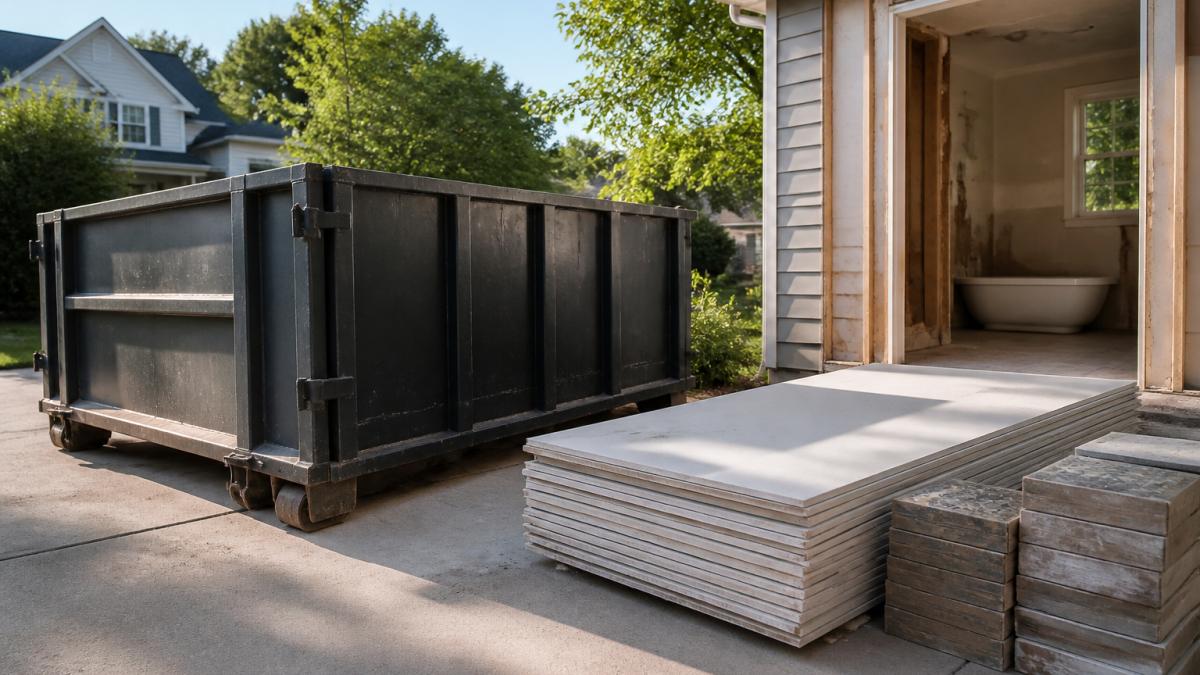
Timing matters as much as size. Book the container to arrive the day before demolition starts, not the morning of. And schedule pickup the moment you're done loading, because most rental periods are counted in days, not by how full the container is.
Permits, Placement, and Neighborhood Rules
A container on private property usually needs no permit. A container on the street often does.
Placement rules vary by city and by homeowners association. Before the truck arrives, confirm three things:
- Whether street placement needs a permit from your city
- Whether your HOA bans containers in visible areas
- Whether the truck can reach the spot without blocking traffic
Also check the OSHA standards for construction site housekeeping if you're running even a small jobsite. Keeping walkways clear of debris isn't just tidy, it prevents injuries.
What Construction Debris Removal Cost Actually Includes
Construction debris removal cost depends on volume, weight, access, and timing. There's no single number, and any quote that promises one before seeing the pile is guessing. What you can do is understand how each line is built, so you can tell a fair quote from a padded one.
Most pricing breaks into five parts:
- Base haul or rental fee. Covers the truck and crew, or the container drop, rental period, and pickup. For a roll-off, this is usually a flat rate tied to container size and rental days.
- Disposal fee (tipping fee). What the landfill or transfer station charges per ton. This is the line that moves most, because it's set by the facility, not the hauler.
- Weight allowance. Most rentals include a set tonnage, commonly one to two tons on a small container. Everything above that is billed per ton as overage.
- Access or long-carry fee. Charged when the truck can't back to the pile and the crew has to carry debris more than a short distance, or when the container can't sit on pavement.
- Prohibited-item surcharge. Applied when a load contains tires, appliances with refrigerant, paint, or treated wood that has to be pulled and handled separately.
How each variable moves the number
- Volume sets the container size. Round up one size rather than risk a second trip and a second pickup fee.
- Weight sets the overage. Heavy inert material, concrete, tile, brick, dirt, hits the tonnage cap long before the container looks full. Light bulky material, insulation, cardboard, Styrofoam, fills the container without approaching the cap.
- Labor sets the hauling fee. Full-service loading costs more than a drop-and-pickup container because you're buying crew time.
- Distance sets the transport portion. A longer drive to the disposal facility raises the base fee even when the load is identical.
- Rental time sets the clock. Most periods are counted in days from drop, not from when you finish loading, so a container sitting idle still costs.
- Prohibited items set the surcharge. One refrigerant appliance or a few cans of solvent can trigger a separate handling charge or a rejected load.
How to read a quote
Ask for these five things in writing before you book:
- Container size and included tonnage
- Rental period length and the daily rate past it
- Overage rate per ton
- Whether the disposal fee is included or passed through
- The accepted-materials list, and what happens if a prohibited item is found
A quote with no stated weight limit is not a quote, it's an opening position. If the hauler won't put the tonnage allowance in writing, assume the overage rate is where the margin lives.
Sorting, Recycling, and Donation Before Pickup
Sorting before pickup cuts your disposal cost and keeps usable items out of the landfill. It's the step most homeowners skip, and it's the easiest money you'll save.
Separate your debris into three piles:
- Donate: cabinets, fixtures, appliances that still work
- Recycle: clean cardboard, metals, untreated lumber
- Landfill: painted drywall, mixed tile, broken materials
Habitat for Humanity ReStores and local donation centers often take cabinets and fixtures. Metal scraps fetch money at scrap yards. Clean lumber can go to a neighbor or a community woodshop.
Safety and Handling Precautions for Renovation Waste
Renovation waste sends people to the ER for two reasons: bad lifting and hidden hazards. Both are preventable.
Follow these basics on every job:
- Wear gloves, eye protection, and a dust mask
- Never lift more than you can safely carry, and use a partner for heavy items
- Watch for nails and screws sticking out of lumber
- Keep walkways and stairs clear as you load
- Don't stack debris higher than the container's rim
Older homes carry extra risk. Lead paint and asbestos show up in pre-1980s materials, and both require special handling. If you suspect either, stop and call a licensed abatement professional. Haulers can't legally take that material in a standard load.
Frequently Asked Questions
How much does construction debris removal cost for a small renovation?
Cost depends on debris volume, weight, disposal fees, and whether you rent a dumpster or hire a hauling service. Ask for an estimate with your debris type and approximate volume so the quote reflects your actual project.
Do I need a dumpster for a small bathroom remodel?
Not always. A bathroom remodel often produces enough tile, drywall, and fixtures to justify a 10-yard dumpster, which is sized for small remodels. If your debris fits in a few bags or a single pickup load, junk hauling may cost less. Estimate your volume first: one cubic yard holds roughly what fits in a standard wheelbarrow load repeated several times.
Can construction debris go in regular trash?
Usually not. Many municipal waste programs limit or ban construction materials like drywall, lumber, concrete, and tile from curbside collection because of weight and disposal rules. Yard waste and large items also have separate handling requirements. Check your local collection rules, then route renovation debris to a dumpster rental, a junk removal service, or a permitted disposal facility.
How should I sort renovation debris before removal?
Separate debris into categories before pickup: lumber, drywall, tile and concrete, metals, and fixtures. Keep hazardous items like paint, solvents, and asbestos-containing materials out of the general pile, since those need special handling. Sorting reduces disposal fees, makes recycling and donation easier, and speeds up loading when the crew arrives.
Small renovations still produce big piles, and getting rid of them shouldn't eat your weekends. Slash Trash Hauling handles furniture, appliances, and demolition scraps across Stanislaus, Merced, and San Joaquin counties. We offer free estimates, same-day availability, and crews that show up when we say we will. Get started with Slash Trash Hauling and clear your renovation debris without the dump runs.