 ultimate-guide
How Junk Removal Pricing Works: 2026 Guide
Table of Contents
- How Junk Removal Pricing Works: The Basics
- Average Cost of Junk Removal by Load Size
- What Is a Minimum Load Fee and Why It Matters
- Cost Drivers: Labor, Disposal Fees, and Hidden Charges
- How to Get an Accurate Junk Removal Quote
- DIY vs. Professional Junk Removal: The Cost-Benefit Analysis
- Regional Variations and Service Area Factors
- Frequently Asked Questions
Last Updated: October 4, 2026
How Junk Removal Pricing Works: The Basics
Junk removal pricing works differently than most people expect. Rather than charging by the hour or item, the industry relies almost entirely on volume-based pricing models.
The national average cost of junk removal is $241, based on 44,583 verified projects completed by Angi Pros (Angi, 2026), with prices ranging from $134 to $306 depending on load size, location, and what you're removing.
Volume-Based vs. Weight-Based Pricing Models
Volume-based pricing dominates the industry, and for good reason. A truck has finite cubic footage, typically 450 cubic feet for a full load, and that's what determines your price. You might have ten heavy items or fifty light ones.
Weight-based pricing exists but is rare and can feel arbitrary to customers. Most junk removal companies use volume-based pricing because it's simpler to explain and offers transparency.
The Role of Truck Capacity and Load Size
A standard junk removal truck holds roughly 450 cubic feet. One-quarter of that truck is a small load, half is medium, and a full truck is large.
Load size directly maps to price. According to 1-800-GOT-JUNK? (2025), volume-based job averages are $107-$396 for small loads, $396-$600 for medium loads, and $600-$1,099 for large loads.
Average Cost of Junk Removal by Load Size
Pricing tiers are the clearest way to understand what you'll actually pay. These ranges come from current market data and reflect what homeowners across the country encounter.
Small Loads and Minimum Charges
A small load fills roughly one-quarter of the truck. According to LoadUp (2026), a minimum load charge is approximately $100 as a standard starting price.
The minimum charge exists because labor costs don't scale down, the crew still needs to show up, drive to your location, load the item, and drive to the disposal facility.
Small loads typically range from $150-$250 depending on your location and what you're removing.
Medium and Full Truckload Pricing
Medium loads fill about half the truck and typically cost $350-$600. Full truckloads run $600-$1,099 according to 1-800-GOT-JUNK? (2025).
Full truckloads offer economies of scale, the per-foot cost drops as the truck fills, so combining multiple projects into one haul can save money.
What Is a Minimum Load Fee and Why It Matters
A minimum load fee is the lowest price a junk removal company will charge, regardless of how little you're actually removing.
Most companies set minimums between $100 and $175 to cover labor costs, vehicle depreciation, fuel, and profit margin.
The minimum charge affects your decision-making. If you have three items scattered across your property, you might consider DIY removal to a local landfill instead.
Cost Drivers: Labor, Disposal Fees, and Hidden Charges
Three factors determine your final price: labor, disposal fees, and surcharges. Most customers only think about volume, which is why their quotes surprise them.
Labor Costs and Service Complexity
Labor is the biggest variable. A straightforward curbside pickup takes 30 minutes, while hauling furniture from a third-floor apartment takes two crew members two hours.
Complexity factors include access difficulty, stairs and tight spaces, heavy items requiring special handling, and hazardous materials. A straightforward curbside pickup costs less than a full-house estate cleanout.
Disposal Fees and Landfill Tipping Charges
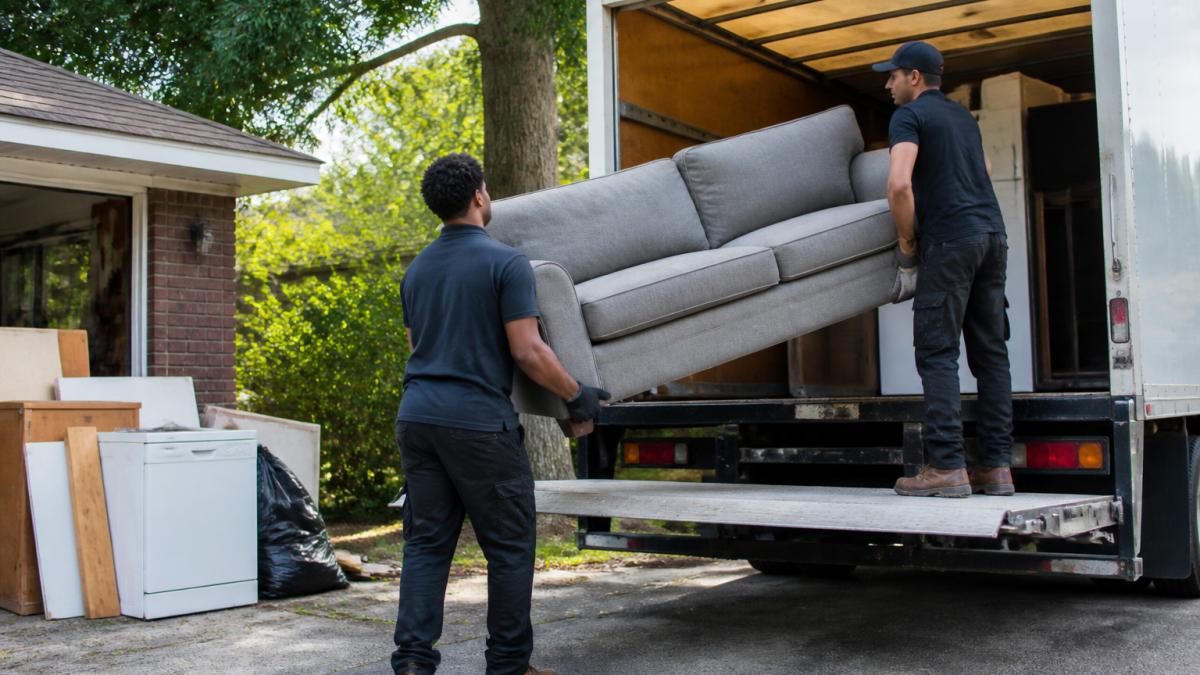
Once loaded, items go to a landfill, recycling center, or donation facility. Landfill tipping fees vary by location and material type, general household items cost less to dispose of than construction debris.
According to industry pricing analysis from Rapid Eye Inspections, a minimum load typically costs between $100 and $175, while a full truckload ranges from $500 to $800, with disposal fees embedded in these figures.
Rural counties with fewer disposal facilities charge higher tipping fees than urban areas, which is why a $250 job in one state might cost $350 in another.
Appliance Recycling and Hazardous Material Surcharges
Refrigerators, air conditioners, and other appliances containing refrigerant trigger additional fees of $50-$150 per appliance due to EPA-regulated refrigerant recovery and disposal.
Hazardous materials like paint, oil, batteries, and electronics require special handling. Some companies include these in their base price; others charge surcharges of $25-$100 per item. Old furniture might contain asbestos or lead paint, adding complexity and cost.
How to Get an Accurate Junk Removal Quote
A good quote eliminates surprises. The process should be transparent, itemized, and based on a real assessment of your property.
On-Site Assessment and Itemized Billing
The best quotes come from on-site assessments. A crew member visits your property, evaluates access difficulty, and provides a firm estimate in 15-30 minutes at no charge.
Itemized billing breaks down the cost into base volume charge, labor surcharge, disposal fees, appliance recycling, and hazardous material handling so you see exactly what you're paying for.
Phone quotes are less accurate than on-site assessments. Photos help but don't show access challenges or hidden items.
Price Transparency and Negotiation
Transparent pricing means a reputable company discloses the base price, labor surcharges, appliance recycling fees, hazardous material charges, and fuel surcharges upfront.
Negotiation is possible, ask about discounts for off-peak scheduling or bundling multiple properties, as most companies don't volunteer these options.
According to LoadUp's pricing transparency research, companies increasingly adopting item-based digital quoting systems where customers select specific items online and see costs update in real-time.
DIY vs. Professional Junk Removal: The Cost-Benefit Analysis
DIY junk removal often costs more than expected when you account for disposal fees, equipment rental, fuel, and your time value.
The True Cost of DIY Removal
Dumpster Rental: A 10-cubic-yard dumpster costs $300-$500 for a week; a 20-yard dumpster costs $400-$700.
Landfill Disposal: Tipping fees range from $30-$100 per ton. A pickup truck load weighs 1-2 tons ($30-$200 in fees).
Equipment Rental: Pickup truck rental costs $30-$75 per day; dolly or hand truck rental costs $10-$20 per day; protective equipment costs $20-$50.
Time Cost: Removing a full house of junk takes 8-16 hours.
Scenario Comparison: DIY vs. Professional
Scenario 1: Clearing a Garage (Moderate Load)
You're removing 15 years of accumulated items: old furniture, boxes, tools, a broken refrigerator, paint cans, and miscellaneous junk. Estimated volume: 1.5 truckloads.
DIY Cost:
- 20-yard dumpster rental: $500
- Pickup truck rental (2 days): $60
- Fuel: $40
Professional Removal Cost:
- Full truckload with appliance and hazardous material surcharges: $700-$900
- Total: $700-$900
- Savings: $185-$385, plus 12 hours of your time
Scenario 2: Single Item Removal (Small Load)
You're removing an old sofa and a broken dresser from your living room.
DIY Cost:
- Pickup truck rental: $35
- Fuel: $15
- Landfill tipping fee: $40
Professional Removal Cost:
- Small load with minimum charge: $150-$250
- Total: $150-$250
- DIY advantage: $0-$100 savings, but requires truck access and 3 hours of effort
Scenario 3: Estate Cleanout (Large Load)
You're clearing out a deceased relative's home: furniture, appliances, boxes of items, old electronics, and miscellaneous debris. Estimated volume: 2-3 full truckloads.
DIY Cost:
- 30-yard dumpster rental (larger size needed): $600
- Multiple trips to landfill and specialized facilities: $200 in tipping fees
- Fuel: $80
Professional Removal Cost:
- 2-3 full truckloads with appliance and hazardous material surcharges: $1,400-$2,100
- Total: $1,400-$2,100
- Advantage: Professional removal is comparable or cheaper, plus you avoid 20-30 hours of labor
When DIY Makes Sense
DIY removal is the better choice when:
- You have one or two small items and access to a truck (Scenario 2)
- You have significant free time and enjoy the work
- Your local landfill has low tipping fees and is nearby (under 10 miles)
When Professional Removal Makes Sense
Professional removal is the better choice when:
- You have multiple items or a full load (Scenarios 1 and 3)
- Your items include appliances or electronics (hazardous material surcharges apply)
- You don't have access to a truck or don't want to rent one
- Your time is valuable (you'd rather spend those hours on work or family)
Regional Variations and Service Area Factors
Pricing varies dramatically by region. According to The OC Bros regional pricing analysis, regional variations are driven by four primary factors: local disposal fees, labor costs, payload limits (weight versus volume), and site access or logistics.
A $250 job in a rural area with low tipping fees might cost $350 in an urban area with higher landfill charges and labor costs.
Seasonal demand affects pricing. Spring and summer bring higher demand, which can push prices up 10-20%. Winter slowdowns sometimes mean discounts for flexible customers.
Understanding how junk removal pricing works puts you in control. When you're ready to clear out unwanted furniture, appliances, or demolition debris, Slash Trash Hauling provides straightforward volume-based pricing with no hidden fees.
Frequently Asked Questions
How does volume-based pricing compare to weight-based pricing in junk removal?
Most junk removal companies use volume-based pricing, charging by how much of the truck space your items fill (measured in eighths, quarters, or halves). Weight-based pricing is less common but can be more transparent for dense items like metal or stone. Volume pricing is simpler for customers to understand upfront, while weight-based models may better reflect actual disposal costs for heavy materials. The industry standard is volume-based, though some providers offer item-based pricing for added clarity.
What is a minimum load fee and when does it apply?
A minimum load fee, typically around $100, is the base charge for any junk removal service, even for small quantities. It covers the cost of dispatching a truck and crew to your location, regardless of whether you fill an eighth of the truck or less. Most companies apply this fee to single-item pickups, curbside-only removals, or small cleanouts. Understanding minimum charges helps you plan multiple jobs together to avoid paying the base fee multiple times.
What items typically cost extra to remove beyond the base price?
Appliances like refrigerators and air conditioning units often incur recycling surcharges due to EPA regulations on refrigerant disposal. Hazardous materials such as paint, batteries, or items with lead paint require special handling fees. Heavy items like hot tubs or safes may trigger additional labor charges. Furniture with stains or damage sometimes costs more to dispose of. Always disclose these items when requesting a quote to avoid surprises on your final bill.
How accurate are online junk removal quotes without an in-person assessment?
Online estimates based on photos or descriptions are rough guides only. An on-site assessment gives you an accurate quote because crews can evaluate load density, accessibility, and hidden items that photos miss. Digital quoting systems have improved, but they can't account for factors like narrow hallways, stairs, or difficult access that increase labor time. For the most reliable estimate, request an in-person or video assessment before committing to service.
What factors cause junk removal prices to vary between different companies?
Regional disposal fees, labor costs, and local regulations drive pricing differences. Companies with longer service areas may charge fuel surcharges. Some include full-service removal from inside your home, while others offer curbside pickup only at lower rates. Overhead costs, fleet size, and profit margins also vary. To compare fairly, ensure you're getting quotes for the same service level: full-service removal from inside versus curbside pickup makes a significant price difference.
Is professional junk removal worth the cost compared to DIY disposal?
Professional removal saves time and physical strain, especially for heavy items like appliances or large furniture. DIY requires renting a dumpster (often $300-$500+ per week), making multiple trips to the landfill, and handling hazardous materials yourself. Professional crews handle disposal fees and recycling compliance, eliminating liability. For estate cleanouts, construction debris, or multi-item removals, the convenience and proper disposal typically justify the professional service cost over DIY effort and expenses.