 how-to
How to Dispose of Old Appliances Safely in 2026
Table of Contents
- Step 1: Check Local Appliance Disposal Rules First
- Step 2: Prepare Your Appliance for Safe Removal
- Step 3: Choose Your Appliance Recycling or Pickup Route
- Refrigerator Disposal: Why It Needs Special Handling
- When to Call an Appliance Removal Service
- What to Do With Appliances That Can't Be Recycled
- Conclusion: Match the Route to the Appliance
- Frequently Asked Questions
Last Updated: October 5, 2026
Step 1: Check Local Appliance Disposal Rules First
Learning how to dispose of old appliances safely starts with one phone call or one website visit, not with your truck keys. Local rules decide everything that follows: what can go to the curb, what needs a special pickup, and what is flat-out banned from the landfill.
Most counties and cities publish their own rules, and they differ from one another. A refrigerator that a neighboring county accepts at the curb may be a prohibited item where you live.
How to Look Up Your County or City Requirements
Start with your city or county public works or solid waste department. Search "[your county] bulky item pickup" or "[your city] appliance disposal." Then check these four things:
- Whether curbside pickup exists for large appliances
- Whether you need to schedule an appointment in advance
- What fees apply, if any
- Which appliances are banned from regular trash
Many areas run a household hazardous waste facility for items with refrigerants or other regulated parts. The US EPA appliance disposal guidance explains why certain appliances need special handling before they are scrapped.
Step 2: Prepare Your Appliance for Safe Removal
Preparation is where most do-it-yourself disposal goes wrong. A loaded refrigerator can weigh several hundred pounds, and a swinging door can crush a hand. Ten minutes of prep prevents injuries and damage.
Empty the appliance completely. Remove shelves, drawers, and any food or water. Then tape the doors shut so they cannot swing open during the move.
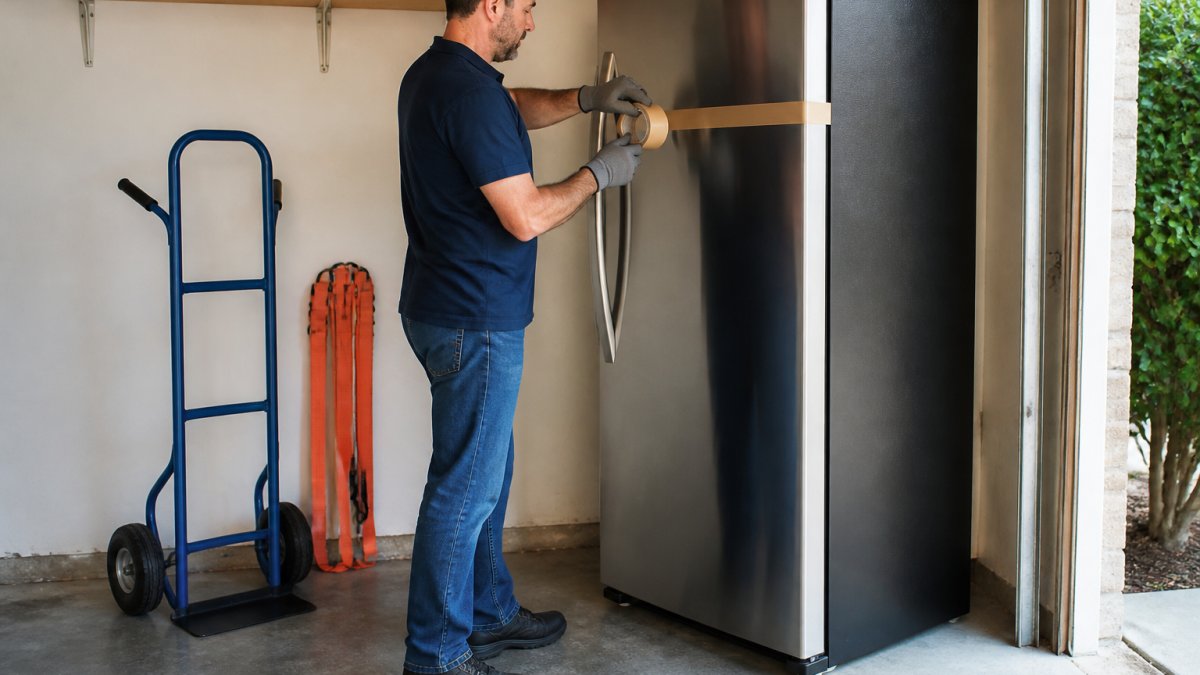
Safety Checklist Before Moving Any Large Appliance
- Unplug the unit and let it sit so any refrigerant settles
- Empty all contents and remove loose parts
- Tape or strap doors closed
- Wear gloves and closed-toe shoes
Step 3: Choose Your Appliance Recycling or Pickup Route
Once the unit is ready to move, you have several routes. The right one depends on the appliance, your access, and how much time you want to spend. The table below is a starting point, not a verdict, call ahead before you commit to any route, because fees and accepted items change by provider and by season.
| Route | Best For | Effort | Typical Cost Pattern |
|---|---|---|---|
| Retailer haul-away | Buying a replacement | Low | Often bundled with delivery; some retailers charge a separate haul-away fee |
| Municipal collection | Curbside service areas | Low | Free to modest fee, varies by city and by appliance type |
| Recycling center drop-off | One or two units | Medium | Often free for metal appliances; fees possible for refrigerant units |
| Donation or resale | Working appliances | Medium | Free, and sometimes a tax-deductible receipt |
| Junk removal service | Multiple units, tight access | Low | Quote-based, priced on volume, access, and item type |
Retailer Haul-Away
Retailer delivery programs are the simplest option when you are already buying a new appliance. Many stores will haul the old one away at the same time. Ask before you buy, because not every store offers it, some charge a separate fee, and some limit haul-away to the same category as the new unit (a new fridge for an old fridge, not a fridge for a washer).
Municipal Collection
Municipal collection works well if your city offers bulky item pickup. You usually schedule an appointment, set the unit at the curb on the assigned day, and wait. Two details trip people up: some cities require the doors to be removed or taped, and some require the refrigerant to be recovered by a licensed technician before the unit is set out.
Recycling Centers and Certified Recyclers
Recycling centers and certified recyclers accept metal appliances and recover the steel, copper, and other valuable metals. Call ahead to confirm what they take, whether a fee applies, and whether they accept refrigerant-bearing units. Many municipal drop-off sites will not accept a refrigerator or AC unit at all, even though they accept washers and dryers.
How to Tell Responsible Recycling From Simple Removal
This is the part most guides skip. A hauler who picks up your fridge and drops it at a scrap yard is not necessarily recycling it responsibly. Refrigerant recovery, oil removal, and downstream processing are what separate responsible recycling from a landfill diversion in name only. Before you hand over a refrigerant-bearing appliance, ask the hauler or recycler these questions:
- Do you recover refrigerant on site, or does the unit go to a facility that does?
- Are your technicians certified to handle refrigerant under the applicable federal rules?
- Where does the unit go after pickup, and can you tell me the name of the downstream facility?
- Do you provide a receipt or certificate of recycling that names the appliance and the date?
A legitimate operation will answer these without hesitation. If the answers are vague, treat that as a signal to use a different route.
The EPA responsible appliance disposal guidance is a good starting point for understanding why refrigerant recovery matters and what questions to ask a provider.
Refrigerator Disposal: Why It Needs Special Handling
Refrigerator disposal is different from getting rid of a toaster.
That is why many areas ban these appliances from normal trash and landfills. The EPA Section 608 program page covers the rules around refrigerant handling and recovery.
So what do you do? Use a route that recovers the refrigerant. That means a certified recycler, a retailer haul-away program, or a licensed removal service.
When to Call an Appliance Removal Service
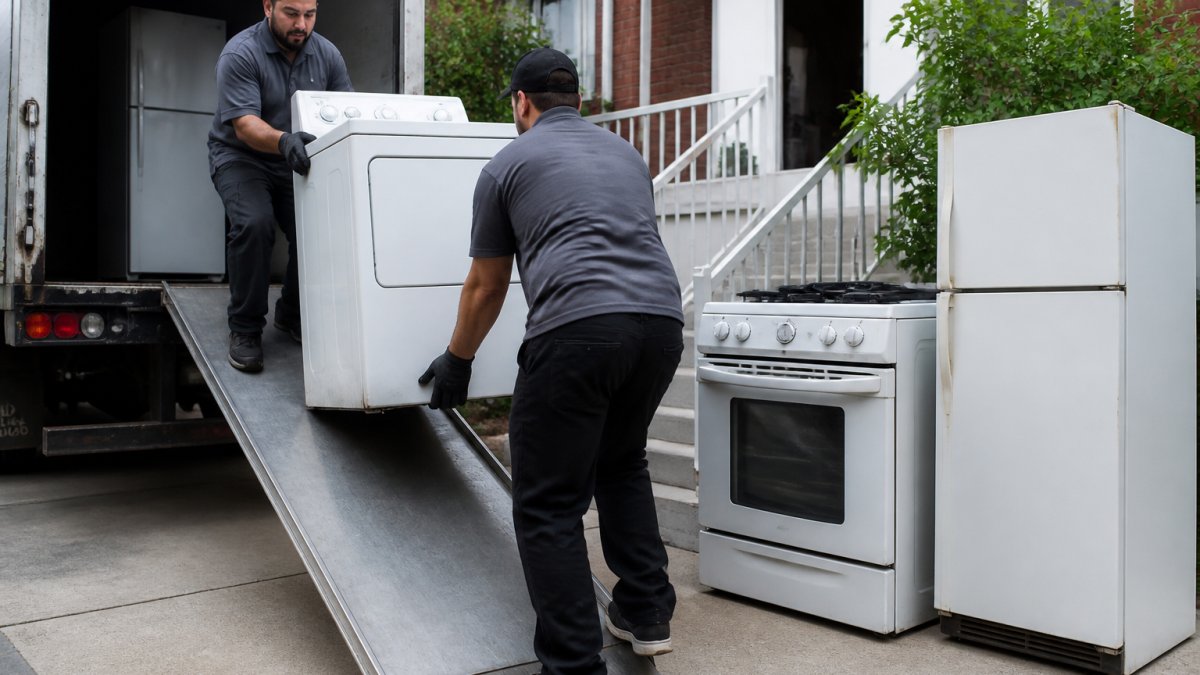
An appliance removal service makes sense when the job is bigger than one unit or the access is tight.
We help people remove unwanted, furniture, appliances, demolition scraps debris. We are a hauling and junk removal. Service.
Here is when a removal service is the better call:
- You have three or more appliances to clear out
- The unit is on a second floor or in a basement
- Your property has limited access for a trailer
- You are managing a move-out, eviction, or estate cleanout
- You simply do not want to deal with it
Pricing depends on the volume of items, access, and the type of debris. Get a quote based on your actual load rather than guessing at a flat rate.
What to Do With Appliances That Can't Be Recycled
Not every appliance can go through standard recycling. The reason is usually one of three things: a sealed refrigerant circuit, a hazardous component, or a mix of materials that a standard scrap yard will not separate. Knowing which category your appliance falls into tells you which route to take.
Appliances With Refrigerant Circuits
Refrigerators, freezers, air conditioners, dehumidifiers, and heat pumps all contain refrigerant. Under federal rules, the refrigerant must be recovered before the unit is scrapped, it cannot be vented to the atmosphere. That is why these units are banned from normal trash in many areas and why a standard metal recycler may turn them away. Route them to a certified recycler, a retailer haul-away program, or a licensed removal service that recovers refrigerant on site.
Appliances With Other Regulated Components
Some appliances carry components that are regulated for reasons other than refrigerant:
- Washers and dryers, mostly steel and generally accepted at scrap yards, but the motor and wiring may need separate handling at some facilities.
- Microwave ovens, contain a high-voltage capacitor that can hold a charge after unplugging; many scrap yards accept them, but do not disassemble one yourself.
- Televisions and monitors, older units may contain leaded glass and other regulated materials; these usually go to an electronics recycler, not a metal scrap yard.
- Small electronics and smart appliances, may contain lithium batteries, which are a fire risk in the waste stream and are often banned from curbside bins.
Household Hazardous Waste Facilities
Your local household hazardous waste facility is the first stop for anything with regulated parts. Many accept appliances that standard recyclers turn away, and some run periodic collection events for items like refrigerant units and electronics. The EPA household hazardous waste page explains what counts as hazardous and how to find a drop-off location near you. Call before you load the truck, accepted items and appointment requirements vary widely.
Donation and Resale for Working Units
For working appliances, donation is often the best answer. Local organizations, charities, and reuse centers take working fridges, stoves, and washers. You keep usable goods out of the landfill and help someone who needs them.
If the unit still runs, try selling it or giving it away before you scrap it. A working appliance has value. A broken one usually does not, and a broken refrigerant unit has negative value, because someone has to pay to recover the refrigerant.
Conclusion: Match the Route to the Appliance
The safe way to dispose of an old appliance comes down to matching the route to the unit. Check local rules first, prepare the appliance, then pick the route that handles its parts correctly.
That is where Slash Trash Hauling comes in. We remove appliances, furniture, and demolition debris, with pickup scheduling and full-service loading. We handle the heavy lifting and the transport so your cleanout is done in one visit.
Frequently Asked Questions
Can I throw old appliances in a dumpster?
Most municipalities and waste haulers prohibit large appliances in standard dumpsters or curbside trash because of refrigerant, oil, and metal components. Refrigerators, freezers, air conditioners, and dehumidifiers contain refrigerants that must be recovered by certified technicians under EPA rules before the unit is scrapped. Putting one in a dumpster can result in fines and leaves hazardous materials in the waste stream. Check your local solid waste department's rules, then use a recycling center, retailer haul-away, or appliance removal service instead.
What is the safest way to dispose of old appliances?
The safest route is a certified appliance recycling facility or a licensed appliance removal service that handles refrigerant recovery and metal processing. Before pickup, unplug the unit, empty it completely, secure doors with tape, and remove any food or water. For refrigerators and freezers, never cut refrigerant lines yourself. If you are hauling it yourself, strap it upright on a dolly and avoid tipping a refrigerator onto its side, which can damage the compressor and release oil.
Can old appliances be donated or reused?
Working appliances can often be donated to Habitat for Humanity ReStores, local charities, or listed on free exchange platforms. Donation keeps usable appliances out of landfills and extends their life. Most organizations require the appliance to be clean, fully functional, and less than about 10 years old. If the unit is broken, donation is usually not an option, and you should route it to appliance recycling or a removal service that can separate the metals and handle any hazardous components.
How should I prepare an appliance for pickup or recycling?
Unplug the appliance at least a day ahead so any refrigerant can settle. Empty all contents, including food, ice, and water. Remove shelves if they are loose, and tape doors shut so they cannot swing open during transport. For a washer or dishwasher, drain remaining water and disconnect hoses. Clear a path to the appliance so the crew can reach it without moving other items. If it is a connected smart appliance, factory reset it and remove your account before it leaves your home.