 how-to
Managing Foreclosure Property Debris Removal: A Step-by-Step Guide
Table of Contents
- What Is Foreclosure Property Debris Removal?
- The Foreclosure Cleanout Process: Step-by-Step
- Estimating Foreclosure Cleanout Cost
- Understanding Abandoned Property Removal Laws
- Property Preservation Debris Removal Checklist
- Handling Hazardous Materials and Safety Protocols
- Documentation and Legal Compliance
- Frequently Asked Questions
Last Updated: October 2, 2026
What Is Foreclosure Property Debris Removal?
Foreclosure property debris removal is the process of clearing out unwanted items, appliances, furniture, and waste from properties that have entered the foreclosure process. When lenders take control of a property, they need it cleared, cleaned, and prepared for sale or rental. This involves sorting through personal belongings, removing large items, and disposing of waste responsibly.
The Foreclosure Cleanout Process: Step-by-Step
A structured approach prevents costly mistakes and ensures nothing gets missed. Here's how professional teams manage foreclosure property debris removal systematically.
Step 1: Conduct a Hazard Assessment
Before anything leaves the property, you need to know what you're dealing with. A hazard assessment identifies safety risks and determines what requires special handling.
Walk through the entire property and document:
- Visible mold or water damage
- Asbestos in insulation, floor tiles, or pipe wrap
- Lead paint (common in homes built before 1978)
- Broken glass, sharp metals, or exposed nails
- Biohazard materials requiring specialized cleanup
- Structural damage that makes entry unsafe
Step 2: Sort and Categorize Items
Not everything goes to the same place. Sorting saves money on disposal fees and opens donation opportunities.
Separate items into these categories:
- Salvageable goods, furniture, appliances, electronics that can be donated or resold
- Bulk waste, mattresses, couches, large broken items
- Appliances, refrigerators, AC units, washers, dryers (require special handling)
- Construction debris, drywall, wood, metal, concrete
- Hazardous materials, paint cans, chemicals, batteries
- Yard waste, branches, leaves, landscaping debris
Step 3: Secure the Property
Before removal begins, protect the property from weather and unauthorized access. This prevents additional damage and liability.
Key steps:
- Board up broken windows and doors
- Tarp roof damage or exposed areas
- Lock all entry points after work
- Post "No Trespassing" signs if required
- Document the property's condition with photos
Step 4: Remove Debris and Bulk Items
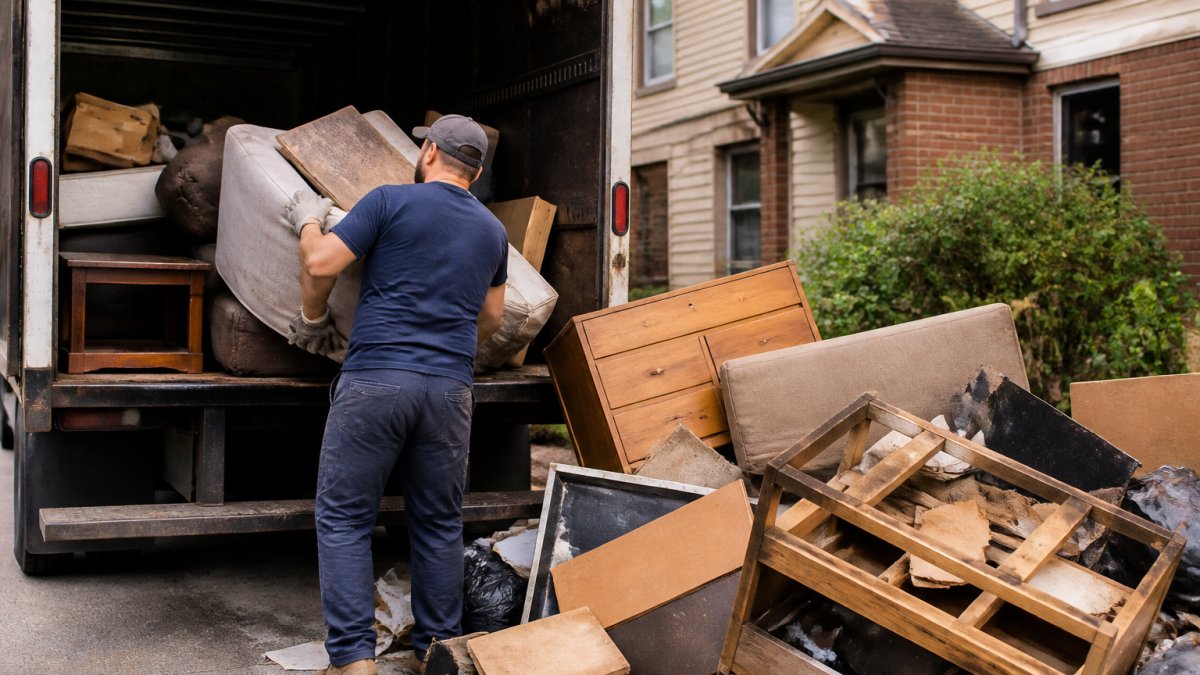
This is the core of managing foreclosure property debris removal. Professional crews remove items systematically, starting from upper floors and working down.
The process follows this sequence:
- Remove large furniture and appliances first
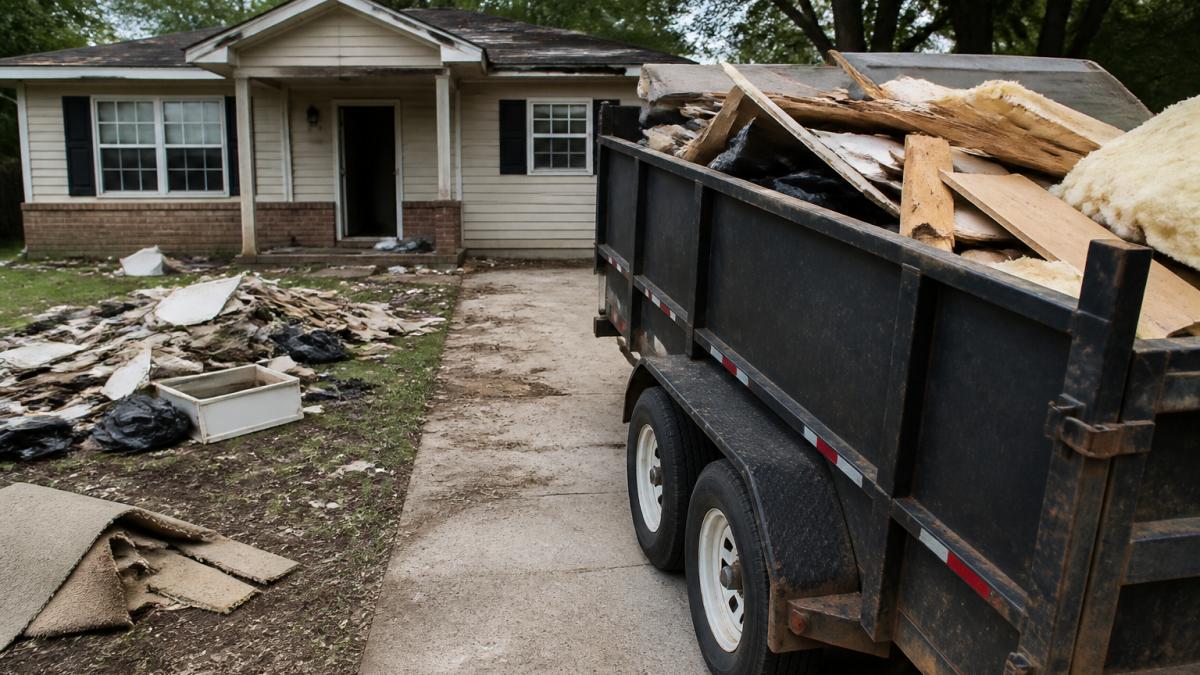
- Clear bulk waste and construction debris
- Load items into appropriate containers (dumpsters, trucks, trailers)
- Remove smaller items and sweep/vacuum
- Haul everything to designated disposal or donation facilities
Estimating Foreclosure Cleanout Cost
Accurate cost estimation requires a structured approach based on measurable property characteristics and regional disposal rates. Generic quotes without methodology lead to budget overruns and disputes with lenders. Here's how to estimate foreclosure cleanout costs systematically.
Step 1: Measure Property Size and Debris Volume
Start with square footage and estimate debris load:
- Light debris (minimal furniture, typical clutter): 500-1,500 sq ft homes typically generate 2-4 cubic yards of removable material
- Moderate debris (furnished, some hoarding): 1,500-3,000 sq ft homes typically generate 5-12 cubic yards
- Heavy debris (severely hoarded, construction waste): 3,000+ sq ft homes or those with structural damage can exceed 20+ cubic yards
Step 2: Identify Hazardous Materials and Special Handling
- Asbestos removal: $5-$15 per square foot for professional abatement (homes built before 1980 often contain asbestos in insulation, floor tiles, or pipe wrap)
- Lead paint remediation: $8-$15 per square foot for certified lead-safe work (federally required for pre-1978 homes under the Renovation, Repair, and Painting Rule)
- Biohazard cleanup: $3,000-$10,000+ depending on contamination extent (mold remediation, bodily fluid cleanup, or animal waste)
- Refrigerant recovery from AC units and refrigerators: $100-$300 per unit (required by EPA under Section 608 of the Clean Air Act)
- Electronic waste disposal: $0.50-$2.00 per pound for certified e-waste recyclers
Step 3: Account for Local Disposal Fees
- General household waste: $35-$75 per ton (varies by county)
- Construction debris: $40-$100 per ton
- Yard waste: $20-$50 per ton (some facilities charge less or accept free)
- Appliance disposal fees: $15-$50 per unit (refrigerators often cost more due to refrigerant handling)
Step 4: Calculate Labor and Equipment Costs
Labor typically represents 40-60% of total cleanout cost:
- Crew size: 2-4 workers for residential properties
- Hourly labor rate: $50-$150 per hour depending on region and crew experience
- Project duration: Light cleanouts (4-8 hours), moderate cleanouts (1-2 days), heavy cleanouts (3-5 days)
- Equipment rental: Dumpster rental ($300-$600 per week), specialty containers for hazmat ($200-$500)
Sample Cost Breakdown
- Labor (2 workers, 2 days): $2,400
- Dumpster rental (10 cubic yards): $450
- Landfill fees (8 tons general waste): $400
- Appliance disposal (refrigerator, washer): $100
- Property securing (boarding, tarping): $300
- Total: $3,650-$4,200
Cost Estimation Red Flags
- Quotes without site inspection: Unreliable. Require an in-person assessment.
- Flat-rate pricing: Risky. Foreclosed properties often contain surprises (hidden hoarding, structural damage, biohazards). Reputable services charge by volume or time with contingency allowances.
- No hazmat disclosure: If a quote doesn't mention how hazardous materials will be handled or priced, ask directly. Asbestos or lead paint discovered mid-project will halt work and inflate costs.
- Disposal facility not named: Verify that the contractor uses licensed, permitted disposal facilities. Illegal dumping creates liability for the property owner.
Documentation for Cost Justification
- Labor invoice with hours and hourly rate
- Dumpster rental receipt
- Landfill weight tickets or disposal facility receipts
- Appliance recycling certifications
- Hazmat abatement invoices with contractor licenses
Understanding Abandoned Property Removal Laws
Legal responsibility for foreclosure property debris removal varies. Understanding who's liable prevents regulatory violations and unexpected costs.
Key legal points:
- Property owners retain some responsibility, Even after foreclosure filing, owners may be liable for debris removal until the lender takes full possession
- Lenders must maintain properties, Once in possession, lenders have legal obligations to prevent hazards and maintain the property
- Local ordinances apply, Cities often have codes requiring property maintenance and debris removal timelines
- Environmental regulations, Hazardous materials disposal is regulated at federal and state levels
Property Preservation Debris Removal Checklist
Use this checklist to ensure no step gets missed during foreclosure property debris removal. This applies whether you're managing the project or hiring professionals.
| Task | Responsibility | Timeline | Status |
|---|---|---|---|
| Conduct hazard assessment | Site inspector | Day 1 | ☐ |
| Document property condition | Photographer | Day 1 | ☐ |
| Identify hazardous materials | Certified assessor | Day 1 | ☐ |
| Sort items by category | Crew | Day 1-2 | ☐ |
| Secure property (board, tarp, lock) | Crew | Day 1-2 | ☐ |
| Remove large furniture and appliances | Crew | Day 2-3 | ☐ |
| Remove bulk waste and construction debris | Crew | Day 2-3 | ☐ |
| Dispose of hazardous materials properly | Licensed hauler | Day 3-4 | ☐ |
| Donate salvageable items | Donation service | Day 3-4 | ☐ |
| Final cleanup and sweep | Crew | Day 4 | ☐ |
| Verify all items removed | Inspector | Day 4 | ☐ |
| Provide documentation to lender | Project manager | Day 5 | ☐ |
Handling Hazardous Materials and Safety Protocols
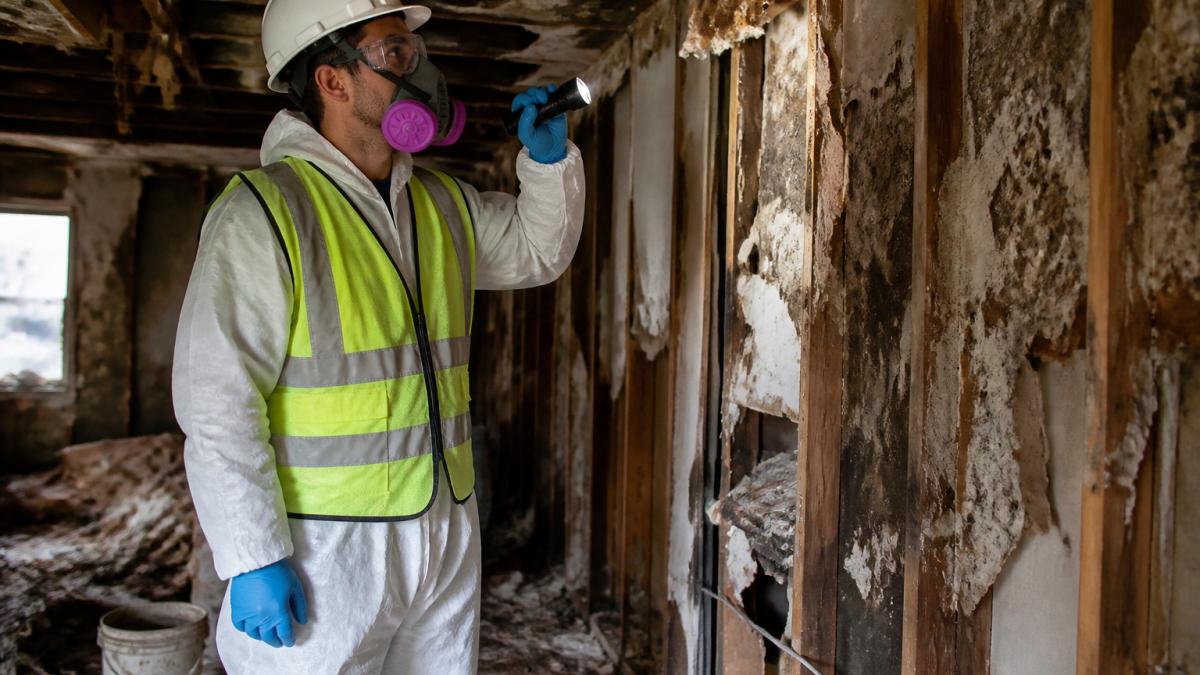
Hazardous materials in foreclosed properties pose serious health, environmental, and legal risks. Improper handling results in EPA fines, worker illness, and liability claims. Safe foreclosure cleanout requires identifying hazards, following material-specific disposal protocols, and ensuring crew certifications match the work.
Common Hazardous Materials in Foreclosed Properties
- Asbestos: Insulation, floor tiles, pipe wrap, roofing, joint compound (homes built before 1980)
- Lead paint: Interior and exterior surfaces, dust, soil (homes built before 1978)
- Mold and biohazards: Water-damaged areas, bodily fluids, animal waste
- Chemicals and solvents: Paint, pesticides, herbicides, cleaning products, fuel
- Refrigerants: Air conditioning units, refrigerators, freezers
- Batteries and electronics: Car batteries, computer equipment, fluorescent bulbs
- Structural hazards: Asbestos-containing drywall, vermiculite insulation
Asbestos Handling and Disposal
Identification: Homes built before 1980 commonly contain asbestos in:
- Pipe insulation and boiler wrap
- Floor tiles and mastic adhesive
- Ceiling tiles and popcorn ceilings
- Roofing shingles and felt
- Joint compound and spackling
Disposal pathway:
- Hire a state-licensed asbestos abatement contractor (verify license with your state environmental agency)
- Contractor conducts air sampling and containment
- Materials are bagged, labeled, and transported to a licensed asbestos disposal facility
- Disposal facility must accept asbestos waste (not all landfills do)
- Contractor provides a completion report and air clearance test
Lead Paint Handling and Remediation
Certified work practices include:
- HEPA-filtered vacuums and air scrubbers during removal
- Containment barriers to prevent dust spread
- Wet-cleaning methods (no dry sanding or grinding)
- Proper disposal of lead-contaminated waste
Disposal pathway:
- Hire an EPA-certified RRP contractor
- Contractor uses lead-safe work practices during removal
- Lead-contaminated waste is bagged and labeled
- Waste is transported to a facility licensed to accept lead waste
- Contractor provides a lead-safe work completion report
Mold and Biohazard Cleanup
Mold assessment and remediation:
- Visual inspection identifies visible mold (black, green, or white growth)
- Moisture source must be identified and fixed (water intrusion, plumbing leak, condensation)
- Remediation scope depends on affected area: small areas (<10 sq ft) can be cleaned with bleach solution; larger areas require professional mold remediation
- HVAC systems must be inspected and cleaned if mold is present
Biohazard cleanup:
- Requires specialized training and bloodborne pathogen certification
- Cleanup crew must use appropriate PPE: double gloves, respirators, full-body suits
- Contaminated materials are bagged and incinerated (not sent to landfill)
- Area is disinfected with hospital-grade cleaners
Refrigerant Recovery from AC Units and Refrigerators
Disposal pathway:
- Hire an EPA-certified HVAC or appliance technician
- Technician recovers refrigerant using recovery equipment
- Recovered refrigerant is recycled or properly disposed of
- Technician provides a recovery certification
Chemical and Solvent Disposal
Disposal pathway:
- Identify all chemical containers and note contents
- Transport to a local hazardous waste collection facility (most counties operate free or low-cost programs)
- Facility accepts paint, solvents, pesticides, batteries, fluorescent bulbs, and other hazmat
- Keep receipts for documentation
Worker Safety Requirements and Certifications
- Asbestos abatement: State-licensed asbestos contractor (requires 40+ hours of training and state exam)
- Lead-safe work: EPA RRP certification (requires 8-hour course and exam)
- Mold remediation: IICRC-certified mold remediation technician (recommended; not federally required but industry standard)
- Biohazard cleanup: Bloodborne pathogen certification (OSHA requirement)
- Refrigerant recovery: EPA Section 608 certification (Type I, II, or III depending on appliance type)
- General hazmat handling: OSHA 10-hour or 30-hour card (recommended for all crew members)
Personal Protective Equipment (PPE)
Minimum PPE for hazardous material handling:
- Nitrile or latex gloves (double-gloved for biohazards)
- Respiratory protection: N95 mask for dust; P100 or powered air-purifying respirator (PAPR) for mold or asbestos
- Eye protection: Safety glasses or goggles
- Full-body coverage: Long sleeves, long pants, closed-toe boots
- For biohazards: Full-body suit, head covering, booties
Before hiring a crew, verify:
- Current certifications (ask to see cards)
- Insurance coverage for hazmat work
- References from previous foreclosure cleanouts
- Written safety plan for the specific property
Documentation for Hazmat Compliance
Keep all hazmat documentation for at least 3 years:
- Contractor licenses and certifications
- Asbestos abatement completion reports and air clearance tests
- Lead-safe work completion reports
- Mold remediation scope and completion documentation
- Refrigerant recovery certifications
- Hazardous waste facility receipts
- Disposal facility permits and licenses
Documentation and Legal Compliance
Proper documentation protects everyone involved in foreclosure property debris removal. It proves compliance, tracks costs, and creates a clear record for lenders and insurers.
Essential documents to maintain:
- Property assessment report, Initial hazard identification and photos
- Disposal receipts, Proof that materials went to licensed facilities
- Donation documentation, Records of items donated for tax purposes
- Hazardous material certifications, Proof of proper handling and disposal
- Before/after photos, Visual evidence of work completed
- Work order and timeline, What was done and when
- Cost breakdown, Itemized expenses for billing and reimbursement
Frequently Asked Questions
What items are typically included in foreclosure property debris removal?
Foreclosure cleanouts typically include furniture, appliances (refrigerators, washers, dryers, air conditioning units), construction or demolition scraps, yard waste, and abandoned personal property. Hazardous materials like batteries, paint, chemicals, and items containing lead or asbestos require specialized handling and disposal. Professional property preservation services categorize items by disposal method to ensure compliance with environmental regulations and maximize any salvageable materials for donation or recycling.
How do you estimate the cost of a foreclosure cleanout?
Foreclosure cleanout cost estimates depend on property size, volume of debris, accessibility, presence of hazardous materials, and local landfill fees. Many providers offer on-site assessments to evaluate the scope of work. Factors affecting pricing include whether items can be donated or recycled versus disposed, distance to disposal facilities, and whether hazardous material handling is required. Contact local providers for a detailed quote based on your specific property conditions.
Who is legally responsible for debris removal from a foreclosed property?
Property owners retain primary responsibility for debris removal from their foreclosed properties, even in disaster scenarios. However, federal guidelines and local regulations may impose requirements on lenders managing REO (real estate owned) properties regarding hazard mitigation and debris clearance. State and local laws vary regarding timelines and standards for property maintenance. Consult your local code enforcement office or a real estate attorney to understand specific legal obligations in your jurisdiction.
What safety precautions are necessary when removing debris from foreclosed properties?
Safety protocols include conducting a hazard assessment before removal, using appropriate personal protective equipment (PPE) like gloves and respirators, identifying and properly handling biohazards or hazardous materials, and ensuring proper waste segregation. Properties may contain lead paint, asbestos, mold, or chemical residue requiring specialized removal. Professional property preservation services follow environmental compliance standards and OSHA guidelines. Never attempt hazardous material removal without proper training and certification.