 blog
Second-Floor Washer Removal: 7 Steps That Prevent Damage
Last Updated: November 19, 2026
Quick Summary
Washer removal from a second floor takes more planning than a ground-floor pickup because the stairs, landings, and doorways leave little room for error. Unplug and drain the machine, secure the drum, and measure the route before the crew arrives. Professional removal lowers the risk of injury and wall damage.
- Unplug the washer, shut off the water valves, and drain the hoses and drum before moving it.
- Reinstall the transit bolt or bracket on front-load washers so the drum stays locked in place.
- Measure the narrowest point on the route, since the washer often clears doorways with only an inch or two to spare.
- Photograph the staircase, landing, laundry room doorway, and truck parking path to speed up the quote.
- Ask providers how they handle stairs and whether pricing is quoted upfront before booking.
Table of Contents
- Why a Second-Floor Washer Needs a Different Plan
- How to Prepare a Washer for Removal
- Washer Removal Stairs and Access: What to Check First
- Professional Washer Removal vs. Doing It Yourself
- What Affects the Price of Washer Removal
- Same-Day Appliance Removal in San Jose
- Washer Removal Service Reviews: What Customers Say and How to Compare
- Book Your Second-Floor Washer Pickup With Slash Trash Hauling
- Frequently Asked Questions
Why a Second-Floor Washer Needs a Different Plan
Moving a washer from an upstairs laundry room takes more planning than moving one from the ground floor. The machine is heavy, the stairs are narrow, and a single wrong turn can scratch a wall or damage a banister. The same steps below apply whether you are clearing a rental or replacing an old machine.
Professional appliance removal costs $60 to $180 on average, and most homeowners pay around $100, according to Angi's appliance removal cost guide. Prices vary with the appliance, its size, and how hard it is to reach, so treat that range as a starting point rather than a quote.
How to Prepare a Washer for Removal
Preparation is where most damage gets prevented. Start by unplugging the washer and shutting off the water supply valves behind it. Once the machine is ready to leave, you can find guidance on safe disposal of old appliances. Disconnect the inlet hoses and drain the standing water from the hose and drum before you move anything.
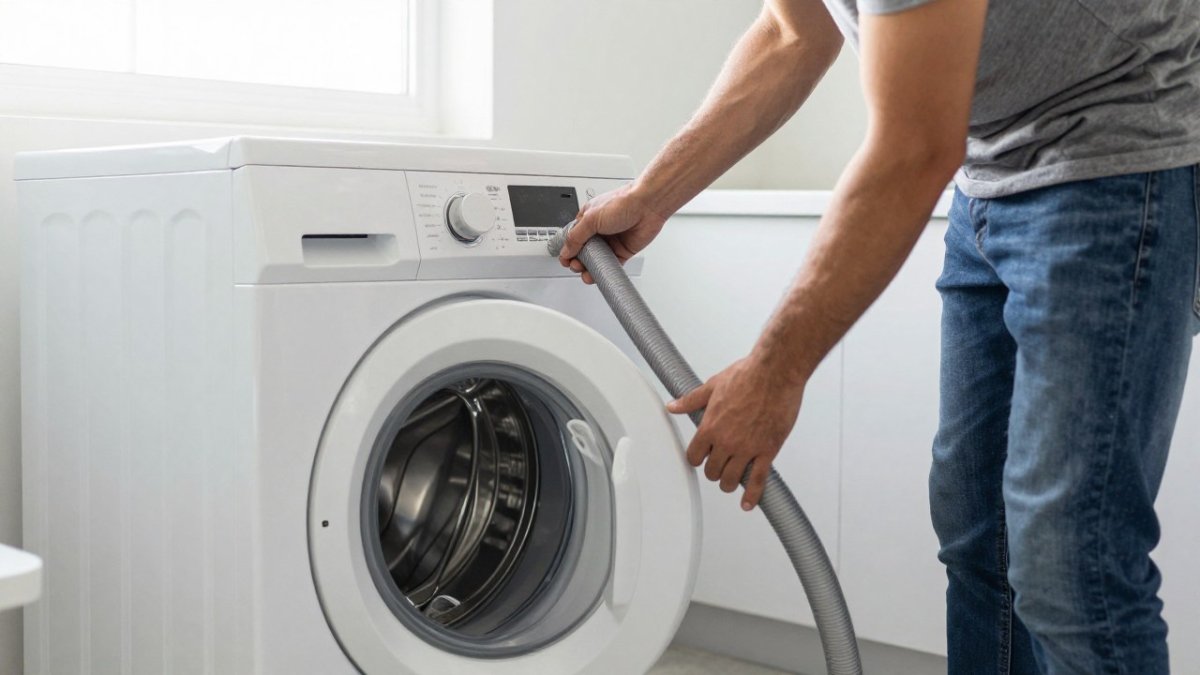
Next, secure the drum. Front-load washers have a transit bolt or bracket that locks the drum in place. Reinstall it before the machine moves, because a loose drum can crack the tub. Tape down the power cord and hoses, then wrap the washer in a moving blanket.
A washer that has been unplugged and drained for at least a few hours is much easier to move. Give the water time to empty fully before anyone lifts. Water sloshing inside the drum adds weight at the worst moment.
Washer Removal Stairs and Access: What to Check First
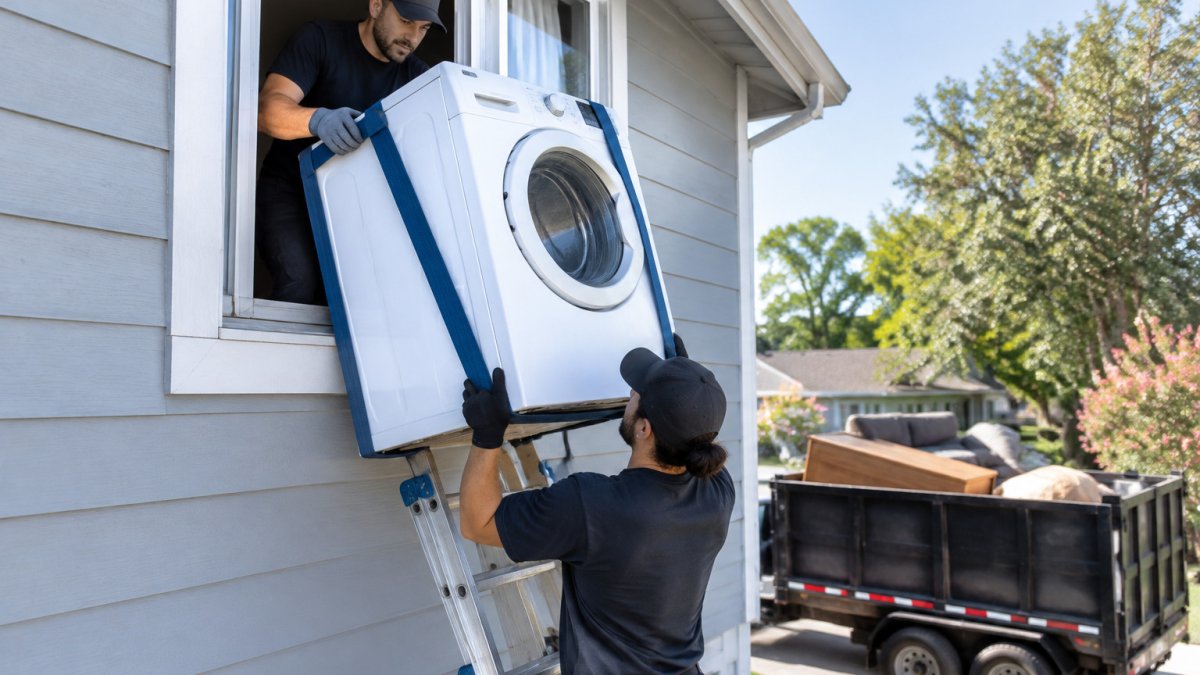
A second-floor washer comes out the same way it went in, only heavier and with less room for error. Before the crew arrives, walk the route from the laundry room to the front door and note four things: stair width, landing depth, doorway width, and every turn between them.
Measure the narrowest point, not the widest. A standard front-load washer is roughly 27 inches wide and about 30 to 34 inches deep, and a top-loader is similar. Most interior doorways clear 30 to 32 inches, so a washer often passes with an inch or two to spare on each side. That margin disappears the moment someone has to pivot the machine on a landing.
Here is what to think about when planning an upstairs pickup:
- Stair width and handrail clearance. A handrail eats several inches on one side. If the remaining clear width is close to the washer's width, the machine has to be tilted and walked down at an angle rather than carried flat.
- Landings and turns. A mid-flight landing is where most wall scuffs happen.
- Doorway swing and thresholds. A door that opens into the laundry room can block the carry.
- Ceiling height and light fixtures. Low ceilings and hanging fixtures limit how high the machine can be tilted on the stairs.
- Floor protection. Padding or floor runners at the top and bottom of the stairs protect hardwood, tile, and stair nosings.
Watch out: a washer should not be carried down stairs by two people who cannot see their own feet.
Access matters just as much at the bottom. Confirm the truck or trailer can park close to the entrance, and flag any step, gravel, narrow gate, or steep grade between the door and the vehicle. If the home sits back from the road or shares a long driveway, say so when you book so the crew can plan truck placement and carry distance before they arrive.
If you are unsure whether your staircase will work, take a few photos: the full flight from the bottom, the landing, the laundry room doorway, and the path to where the truck will park. Those four photos answer most of the questions a crew would otherwise ask on arrival.
Professional Washer Removal vs. Doing It Yourself
Doing it yourself avoids the service fee, but a second-floor washer is heavy and awkward. If you are weighing options, you can compare junk removal and dumpster rental for your situation. Many people underestimate how much a stacked or full-size machine weighs, and a strained back or a damaged stairwell can cost more than the removal fee.
Hiring a professional makes sense when the stairs are steep, when the machine is a front-loader that needs careful handling, or when you lack two strong helpers. Doing it yourself can work for a small top-loader on a straight, wide staircase with plenty of help.
Pros and cons at a glance:
- Professional removal: Lower risk of injury and wall damage, faster, and no hauling trip required. The trade-off is a service fee.
- Doing it yourself: No fee and a flexible schedule. The risks are injury, damage to stairs and walls, and needing a vehicle and disposal site.
Here is a quick side-by-side of the two options so you can weigh the trade-offs for your own staircase.
| Option | Main advantage | Main risk |
|---|---|---|
| Professional removal | Lower risk of injury and wall damage | Service fee |
| Doing it yourself | No service fee and a flexible schedule | Injury, damage to stairs and walls |
| Hiring a pro | Best for steep stairs or front-loaders | Needs a quote before booking |
| DIY | Works for a small top-loader on a straight staircase | Needs a vehicle, two strong helpers, and a disposal site |
What Affects the Price of Washer Removal
Two washers of the same size can carry different removal costs because the price tracks the work involved. You can see a local San Jose breakdown of what junk removal typically costs before requesting a quote. The biggest driver for an upstairs pickup is the carry itself: how many flights, how tight the turns, and how far the machine travels from the laundry room to the truck.
Here is how each factor tends to move a quote:
- Number of flights and turns. A straight run down one flight is the simplest case. Switchbacks, narrow landings, and doorways that require removing a door add handling time and crew attention.
- Washer type and weight. Front-loaders are heavy and front-heavy, which makes them harder to balance on stairs. Stacked units have to be separated first. A compact apartment washer is a much easier carry than a full-size machine.
- Disconnection and preparation. If the washer is already unplugged, drained, and disconnected, the crew can focus on the carry. If it is still hooked up, expect the quote to reflect the extra steps.
- Access at ground level. A close parking spot is faster than a long driveway, a narrow side gate, or a flight of exterior steps.
- Condition of the machine. A washer that has leaked or sat unused may need extra handling, and one that is being replaced may need to come out before the new unit goes in.
- Disposal and recycling. Responsible disposal or recycling of the old unit is part of the job, and how the machine is processed locally can factor into the final number.
We give you a free quote by phone, text, or photo so you know the cost upfront. To make that quote accurate the first time, send us:
- The washer's make and model, or a photo of the rating plate
- Whether it is a front-loader, top-loader, or stacked unit
- The number of stairs and whether there are landings or turns
- The narrowest doorway on the route
- Where the truck can park and how far that is from the door
Call or text 408-833-5405 to get your quote. Prices depend on the specifics of your job, so the most accurate number comes from a direct estimate rather than a general range.
Same-Day Appliance Removal in San Jose
Same-day service is available in San Jose, though availability depends on the day's schedule. If your washer is leaking, blocking a move-out, or holding up a renovation, calling early in the day gives you the best chance of a same-day slot.
Local customers also ask whether a crew can reach a home tucked back from the road or down a long driveway. Tell us about the access when you call, and we can plan the truck placement before the crew arrives. For broader guidance on disposal options around the area, see our article.
Washer Removal Service Reviews: What Customers Say and How to Compare
Reviews are a useful way to judge a removal company, but read them with care. Our guide explains how to vet reliable junk removal services and read their reviews critically. Look for specific details about punctuality, how the crew handled the stairs, and whether the price matched the quote. A customer on Yelp wrote: "Same-day service, kind, professional, and efficient. Great value!" (Erin M., Yelp, 5 stars).
When comparing providers, ask how they handle stairs, whether they bring padding, whether pricing is quoted upfront, and what happens if the job takes longer than expected. Consistent answers and clear pricing are better signs than a long list of stars.
Book Your Second-Floor Washer Pickup With Slash Trash Hauling
Moving a washer down a flight of stairs is not a job to rush. Prepare the machine, check the route, and let a crew that handles upstairs appliances do the heavy lifting. Slash the Mess, Reduce the Stress!
Call or text 408-833-5405 for a free quote, and we will confirm your pickup time and access details.
Frequently Asked Questions
How much does it cost to remove a washing machine?
Pricing depends on the machine's location, whether it is on an upper floor, how easily the crew can reach it, and how much else is going out with it. Slash Trash Hauling does not publish a flat rate for washer removal. Pricing is honest and transparent with no hidden fees, and you can get a free quote by phone, text, or photo at 408-833-5405. Sending a photo of the laundry room and the stairway helps the crew give you a clear number before anyone arrives.
Who will pick up my washer for free?
Some retailers and appliance stores offer haul-away when they deliver a new machine, but that usually depends on a purchase. Slash Trash Hauling is a paid service, so we recommend asking any free-pickup option exactly what it covers, including whether it includes stair carries. If you want a dependable, quoted pickup for a washer already sitting upstairs, call or text 408-833-5405 for a free quote.
How do I find a service to remove a washer from a second floor in San Jose?
Look for a crew that asks about stairs, access, and the laundry room layout before quoting, not after. Tell them the washer is on the second floor and describe the staircase width and any tight turns. A local San Jose company that handles residential junk and appliance removal can plan the carry in advance. Slash Trash Hauling serves San Jose and the surrounding Valley and offers same-day and next-day service when schedules allow.
Do I need to disconnect the washer before the removal crew arrives?
Yes, you should unplug the washer and shut off the water supply before the crew arrives, and drain any remaining water from the hoses. Disconnect the drain hose and water lines and tape or tie them so they do not drag on the stairs. Clear the path from the laundry room to the front door. Having these steps done ahead of time keeps the pickup moving and reduces the chance of water damage during the carry.