 how-to
Yard Waste Removal for Homeowners: A Step-by-Step Guide
Table of Contents
- What Qualifies as Yard Waste
- Understanding Yard Waste Disposal Regulations
- How to Dispose of Tree Branches and Large Debris
- Curbside Collection Guidelines for Yard Waste Removal
- Composting and Mulching Options at Home
- Yard Waste Pickup Cost and Professional Removal Options
- Drop-Off Facilities and Seasonal Pickup Services
- Conclusion
- Frequently Asked Questions
Last Updated: October 1, 2026
What Qualifies as Yard Waste
Yard waste is organic material from your property that can be composted or recycled instead of sent to a landfill. It includes grass clippings, leaves, branches, tree trimmings, and other plant debris from routine yard maintenance.
Common types of yard waste include:
- Grass clippings and lawn trimmings
- Fallen and raked leaves
- Tree branches and limbs
- Plant stems and garden debris
- Brush and shrub clippings
- Weeds and dead plants
What does NOT count as yard waste:
Rocks, soil, treated wood, diseased plants, and invasive species require different disposal methods and cannot enter standard municipal composting facilities.
Diseased plants (oak wilt, Dutch elm disease, fire blight) cannot be composted because the pathogens survive the composting process and spread disease when finished compost is distributed. Diseased wood must be burned (where permitted), buried deep on your property, or sent to a dedicated facility. Contact your county extension office for guidance on identifying and disposing of diseased material specific to your region.
Invasive species present a more serious problem. Plants like Japanese knotweed, garlic mustard, buckthorn, and multiflora rose spread aggressively and cannot be controlled through standard composting. Even small fragments can regenerate. Most municipalities prohibit invasive plants in yard waste collection because they contaminate compost facilities and spread to new areas when finished compost is used.
Common invasive plants to watch for:
- Japanese knotweed: Tall bamboo-like stems, heart-shaped leaves, white flowers in late summer. Spreads via rhizomes; fragments can regenerate.
- Poison ivy and poison oak: Three-leaflet clusters, can cause severe skin reactions. Never compost or burn; wear protective gear when handling.
- Buckthorn: Dense shrub with thorns, small black berries, spreads rapidly.
- Garlic mustard: Biennial with heart-shaped leaves, white flowers, strong garlic smell when crushed.
- Multiflora rose: Thorny shrub with clusters of small pink or white flowers, spreads via seeds and root fragments.
Disposal of invasive species:
If you identify invasive plants on your property, do not put them in yard waste collection. Options include:
- Bag and trash: Double-bag invasive material in heavy-duty plastic bags and place in regular trash collection. This prevents spread but sends material to landfill.
- Burn (if permitted): Check local burn regulations. Some areas allow controlled burning of invasive species on private property during designated seasons. Never burn treated wood or diseased material.
- Bury on-site: Dig a hole at least 2 feet deep and bury invasive material where it won't be disturbed. Cover with soil and monitor for regrowth.
- Professional removal: Hire a landscaper or environmental contractor experienced in invasive species removal. They know proper disposal methods and can prevent regrowth through follow-up treatment.
- Contact your county extension office: Many regions have invasive species programs and can recommend local disposal resources or removal services.
Treated wood and construction debris:
Pressure-treated lumber, painted wood, and composite materials cannot be composted. They contain chemicals (copper, arsenic in older lumber) that contaminate soil and compost. Dispose of treated wood through regular trash collection or take it to a construction debris facility.
The key distinction: Yard waste is healthy, biodegradable plant material from normal yard maintenance. Anything else, diseased plants, invasive species, treated wood, rocks, soil, requires a different disposal method. When in doubt, contact your municipality's waste management department or county extension office for guidance.
Understanding Yard Waste Disposal Regulations
Local rules for yard waste removal vary by municipality, so check your city or county guidelines before collection day.
According to City of Raleigh waste collection guidelines, residential yard waste collection allows up to 15 biodegradable bags with a 25-pound limit per bag, plus 5 bundles of branches per collection. Your area may have different limits, so verify before collection day.
New municipal ordinances are taking effect across the country. Town of Apex yard waste regulations established new rules effective July 1, 2026, that manage the amount of yard waste residents can set out. These changes reflect increased regulatory oversight of yard waste volume.
Key regulations to understand:
- Bag and bundle limits per collection cycle
- Weight restrictions per container
- Acceptable materials (biodegradable bags only in most areas)
- Seasonal collection windows
- Permit requirements for large volumes
Most municipalities require biodegradable paper bags or rigid containers, not plastic bags, to keep organic material out of landfills.
How to Dispose of Tree Branches and Large Debris
Bundling branches for collection:
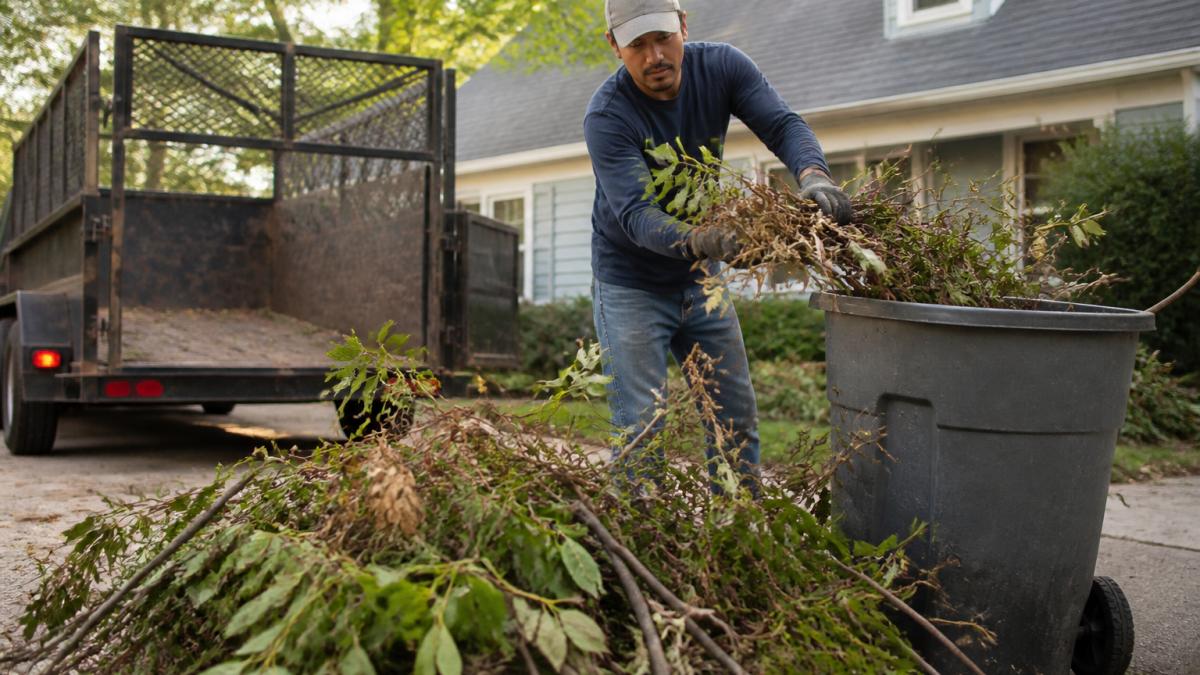
Tie branches together with twine or rope into bundles no thicker than 4-6 inches in diameter. Each bundle should be no longer than 4 feet. This size makes them easy to handle and fits standard collection trucks.
Lay bundles flat at the curb on collection day. Some municipalities limit you to 3-5 bundles per pickup, so check your local rules. Oversized branches or logs may require a separate bulk pickup appointment.
For tree removal debris or storm cleanup with massive branch volumes, curbside collection alone won't work.
When to call a professional:
- Storm damage with multiple downed trees
- Tree removal creating 10+ bundles of debris
- Branches too thick or long for standard bundling
- Limited access to your property for collection trucks
Curbside Collection Guidelines for Yard Waste Removal
Curbside yard waste removal is the easiest disposal method if your area offers it.
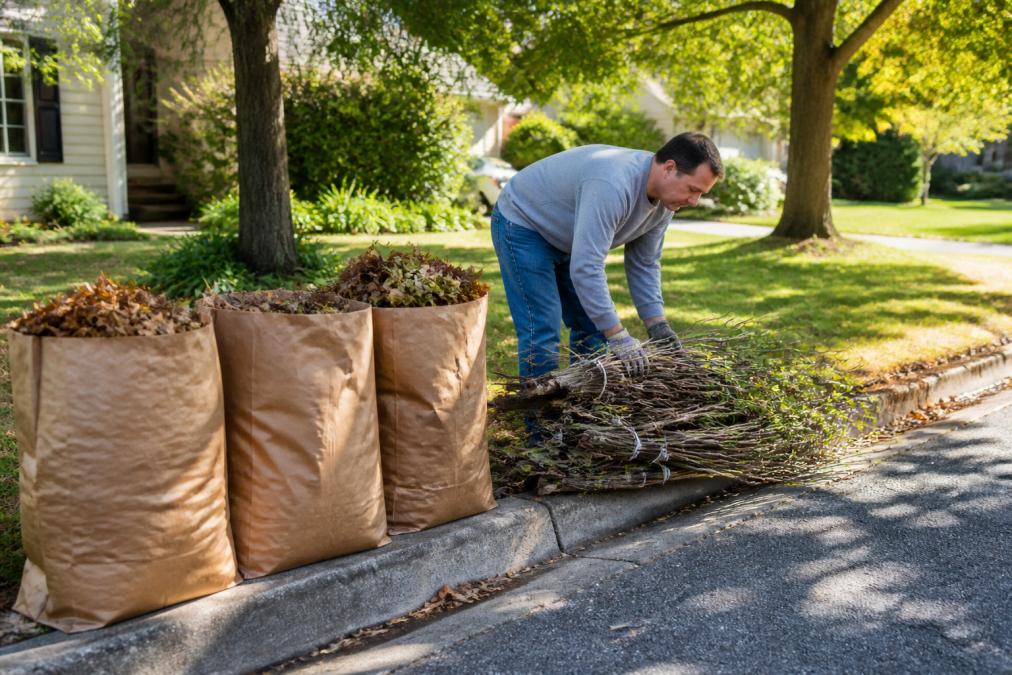
Preparing materials for collection:
Collection schedules and limits:
Composting and Mulching Options at Home
Home composting reduces curb volume and creates free soil amendment; most homeowners can start a basic pile with zero equipment.
Home composting basics:
Mulching in place:
Yard Waste Pickup Cost and Professional Removal Options
Choosing a disposal method means weighing upfront cost against time and total volume.
Cost comparison framework:
When each option makes financial sense:
- Curbside collection: Routine yard maintenance (grass clippings, small pruning debris) spread across the season. Cost: $0. Best if your area offers weekly pickup and you stay within volume limits.
- Home composting: Ongoing grass clippings and leaves if you have yard space and enjoy gardening. Cost: $0-$50 (equipment). Saves $30-$60 annually in soil amendments.
- Drop-off facility: One-time cleanups where you have a truck or trailer. Cost: $0-$25 per load plus your time to haul. Best if you live within 10 miles of a facility.
- Professional removal: Storm cleanup, tree removal, or projects exceeding 10 bundles. Cost: $150-$500+ depending on volume and access. Fastest option; often cheaper than multiple curbside cycles when you factor in waiting time.
Real-world scenario:
Drop-Off Facilities and Seasonal Pickup Services
Drop-off facilities accept yard waste year-round at no cost or low fees if curbside collection isn't available.
Seasonal bulk pickup services:
Conclusion
Yard waste removal doesn't have to be complicated. Understanding what your municipality accepts, preparing materials correctly, and choosing the right disposal method saves time and money. Whether you compost at home, use curbside collection, or hire professional removal depends on your volume, timeline, and property access.
| Disposal Method | Best For | Time Required | Cost |
|---|---|---|---|
| Curbside collection | Routine yard maintenance | Seasonal (varies by city) | Free-$0 |
| Home composting | Grass clippings and leaves | 2-6 months | Free (equipment optional) |
| Mulching in place | Grass clippings | Ongoing | $0 (mulching blade cost) |
| Drop-off facility | One-time cleanup | 1 day (your time) | Free-$25 per load |
| Professional removal | Large projects and storm debris | Same day or next day | $150-$400+ depending on volume |
Frequently Asked Questions
How much does yard waste removal typically cost?
Yard waste pickup cost depends on the volume of debris, your location, and whether you use curbside collection or hire professional removal. Many municipalities offer free or low-cost curbside yard waste removal during seasonal collection windows. Professional hauling services charge based on the amount of material and truck space needed. Contact your local waste management provider or a professional service for a free estimate tailored to your specific needs.
What's the best way to dispose of yard waste?
The best method depends on the type and volume of material. For grass clippings and leaves, composting at home or using a mulching mower reduces landfill disposal. For branches and larger debris, curbside collection during seasonal windows is often free. Branch bundling (typically limited to bundles under 4 feet long and 50 pounds) works for many programs. For large quantities or storm cleanup, professional yard waste removal services handle bulk pickup efficiently and ensure proper diversion from landfills.
Can I put yard waste in my regular trash bin?
Most municipalities prohibit yard waste in regular trash bins due to municipal ordinance restrictions and landfill space concerns. Yard debris takes up significant landfill capacity and can be diverted through composting, mulching, or dedicated yard waste collection programs. Check your local waste management guidelines, as violations may result in collection refusal or fines. Seasonal collection services and drop-off facilities are designed specifically to handle organic waste properly.
How do I prepare branches and brush for curbside pickup?
Prepare yard debris by bundling branches and brush securely with twine or rope, keeping bundles under 4 feet long and 50 pounds. Place biodegradable bags of leaves and grass clippings at the curb (most programs allow 10-15 bags per collection). Ensure materials are accessible and not blocking sidewalks or driveways. Check your local collection schedule and volume limits before placing materials out. Proper preparation prevents collection delays and makes pickup safer for waste management crews.