 How-to
Best Ways to Remove Heavy Furniture: A Step-by-Step Guide
Last Updated: October 23, 2026
Quick Summary
To remove heavy furniture safely, clear your path, measure doorways, use equipment like dollies and furniture straps, and always lift with your legs instead of your back. Two people working together is dramatically safer than moving alone, and disassembling pieces when possible makes them easier to maneuver through tight spaces.
- Use a dolly rated for at least 50% more weight than your furniture to prevent wobbling and tipping.
- Measure doorway openings diagonally before moving, and remove doors from hinges if needed for extra clearance.
- Never lift heavy furniture alone if it weighs more than 75 pounds per person.
- Bend at your knees and keep your back straight when lifting, using your legs instead of your spine.
- Lay cardboard or plastic sheeting under furniture paths and wrap wall corners with foam padding to prevent damage.
Table of Contents
- Why Removing Heavy Furniture Safely Matters
- How to Prepare Furniture for Pickup
- Essential Heavy Furniture Moving Tools
- How to Move Furniture Through a Doorway
- Lifting and Carrying Techniques
- How to Dispose of Old Furniture
- Common Mistakes to Avoid
- Frequently Asked Questions
Why Removing Heavy Furniture Safely Matters
Learning how to remove heavy furniture safely might seem straightforward, but skipping proper technique leaves you vulnerable to injury, damaged walls, and broken pieces.
The good news: knowing how to remove heavy furniture safely isn't complicated. It just requires the right preparation, tools, and technique. This guide walks you through moving heavy furniture without injury or damage.
How to Prepare Furniture for Pickup
Before you touch a single piece, spend time preparing. This step saves your back, your walls, and your timeline.
Start by clearing the path from the furniture to your exit.
Measure doorways and hallways where the furniture will pass through. A sofa that fits through your living room door might not fit through your front entrance.
Clear the Path
Walk the entire route from the furniture's current location to where it's leaving your space, noting every turn, doorway, and step.
Remove items in the way:
- Throw pillows and cushions
- Area rugs or runners
- Small furniture pieces
- Cables, cords, or extension wires
- Boxes or storage items
Open every door along the route. Wedge them open with doorstops so your hands stay free. Check for low-hanging light fixtures or ceiling fans that could catch the furniture.
Protect Your Floors and Walls
Furniture leaves marks. Scratches on hardwood, scuffs on paint, dents in drywall. Protecting these surfaces takes minutes and saves hundreds in repairs.
Lay down cardboard or plywood sheets under the furniture's path to prevent dragging damage on hardwood or tile. For carpet, plastic sheeting is quieter and easier to slide.
Cover wall corners and doorframe edges with foam pipe insulation or thick cardboard. Wrap it with painter's tape so it stays in place.
Essential Heavy Furniture Moving Tools
The right equipment cuts your effort in half and your injury risk to nearly zero. You don't need much, but what you use should be solid.
Dollies and Hand Trucks
A dolly is your first line of defense for heavy furniture. These wheeled platforms let gravity do the work instead of your lower back.
Furniture dollies have four wheels and a flat platform, ideal for dressers, nightstands, and boxes. Load the piece, tilt it onto the dolly, and roll it out.
Hand trucks have two wheels and a vertical frame, best for tall, narrow items like bookcases or refrigerators. Tip the item back onto the wheels and push; they require less floor space than dollies.
Choose a dolly or hand truck rated for at least 50% more weight than your furniture.
Sliders and Furniture Pads
Sliders go under furniture legs and let you glide pieces across floors without lifting.
Hard plastic sliders work on carpet, gripping the fibers so you can push smoothly without dragging. Felt furniture pads work on hardwood and tile, soft enough to prevent scratches but slippery enough to let the furniture move.
Place sliders under each leg or corner before you push. The furniture stays low to the ground, which means less strain on your back and less risk of tipping.
Straps and Lifting Aids
Furniture straps wrap around a piece and give you handles to grip, distributing weight across your body instead of concentrating it in your hands and forearms.
Shoulder straps let two people carry a sofa or dresser by spreading the load across your shoulders and torso. Your core muscles handle the weight instead of your arms.
Furniture dollies with straps combine wheels and handles. You push instead of carry, which is always safer.
Lifting aids like forearm forklift straps go under furniture and let you lift using your legs instead of your back. They're especially helpful for couches and mattresses.
How to Move Furniture Through a Doorway
Doorways are where most moves go wrong. Furniture gets stuck. People panic. Walls get damaged.
Measure Before You Move
Measure the furniture's height, width, and depth. Then measure your doorway opening, including the diagonal from corner to corner. The furniture must fit through both dimensions.
A sofa that's 36 inches tall and 84 inches wide needs a doorway at least that size, but measure the diagonal too.
If the measurements are close, remove the door from its hinges. This gives you an extra 2-3 inches of clearance.
Disassemble When Possible
Before you wrestle a piece through a tight space, ask: can this come apart?
Many sofas have detachable legs or arms. Dressers often have removable drawers. Bed frames come apart into headboard, footboard, and rails. Removing these pieces cuts the overall size and makes the move much easier.
Check underneath and inside. Look for bolts, screws, or clips. Take photos as you disassemble so you remember how it goes back together.
Angle and Rotate Strategically
When a piece won't fit straight through, angle it.
Tilt the furniture onto one corner and rotate it diagonally. This reduces the effective width. A sofa that's 84 inches wide becomes 60 inches when tilted at a 45-degree angle.
Go slowly. Move it a few inches, check the fit, then adjust. Rushing this step causes damage.
For doorways with tight vertical clearance, tilt the furniture forward or back. Lower one end while raising the other. This reduces the effective height.
Lifting and Carrying Techniques
Your back is not a crane. Respect its limits and you'll move furniture without pain.
The Two-Person Lift
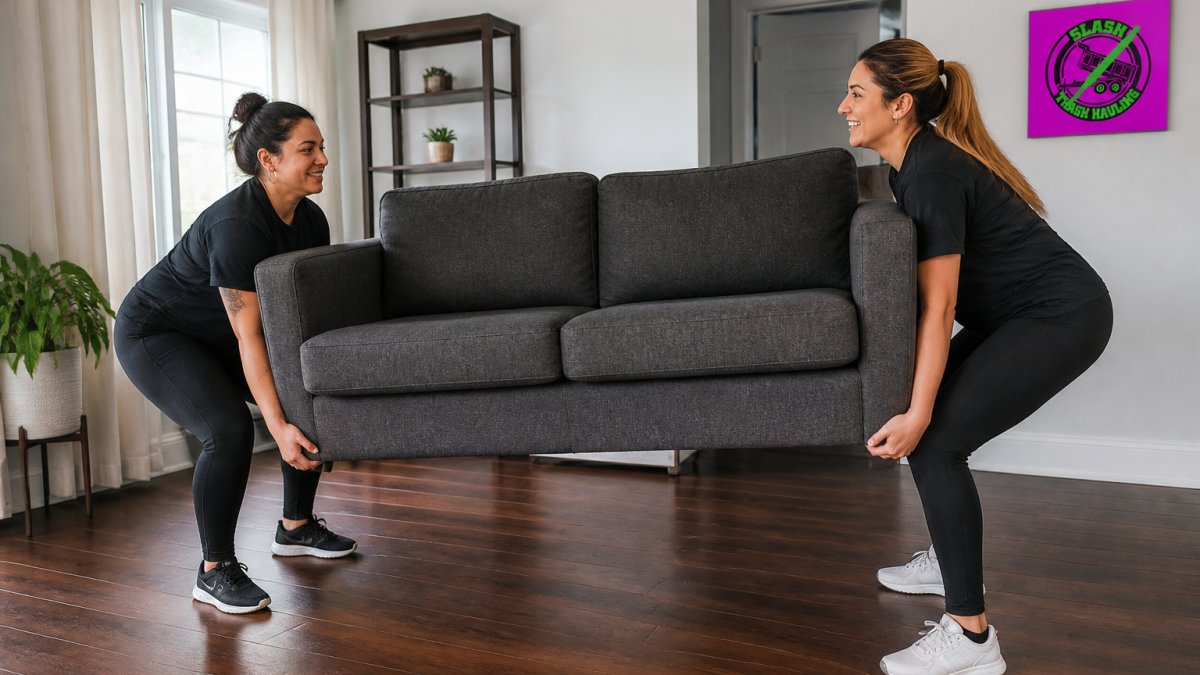
Never move heavy furniture alone. Two people aren't just safer, they're dramatically safer.
Stand on opposite sides of the furniture. Bend at your knees, not your waist. Keep your back straight and your core engaged.
Call or Text for a Free Quote →
Keep the furniture close to your body. The farther it is from your core, the more strain on your lower back.
Move slowly and deliberately. Rush and you stumble. Stumbling while holding heavy furniture is how injuries happen.
Proper Body Mechanics
Your legs are stronger than your back. Use them.
Squat down to lift, don't bend at the waist. Bend your knees and keep your back upright.
Tighten your core before you lift. This stabilizes your spine and protects your lower back. Take a breath and hold it during the lift.
Keep the furniture as close to your body as possible. Every inch of distance multiplies the strain on your spine.
Take breaks. If you're tired, you're more likely to use poor form. Poor form is how injuries happen.
When to Ask for Help
If the furniture is heavy enough that you're straining, stop and get help.
Heavy furniture isn't a test of strength. It's a test of smart planning. If you can't comfortably lift and carry a piece with another person, you need professional help.
A piece that weighs more than 75 pounds per person is a good threshold for calling in reinforcements.
This is where hiring reliable junk removal services makes sense. They also handle disposal, which saves you another trip.
How to Dispose of Old Furniture
Once the furniture is out, you still need to get it gone. Learn specialized steps for disposing of old office furniture if you're clearing out a workspace. Your options depend on the condition of the piece and your timeline.
Donation and Reuse Options
If the furniture is still in good condition, donation is the easiest path.
Check local options too. Habitat for Humanity ReStore accepts furniture and building materials. Some churches and community centers take donations.
Document the donation for your taxes. Keep the receipt and photos.
Reuse is also an option. Broken furniture can be repurposed. A damaged dresser becomes a craft table. A worn sofa becomes patio seating.
Bulk Item Pickup Services
Many municipalities offer bulk item pickup as part of trash service. Check your local waste management provider's website for schedules and rules.
Typically, you place items curbside on a designated day. For guidance on disposing of old mattresses, check what your local service accepts, since mattresses often have separate rules. Trucks come by and pick them up.
Call ahead to confirm what they accept. Some services take furniture but not mattresses. Others have restrictions on size or condition.
When to Call a Professional Removal Service
If the furniture is too large to donate, too damaged to reuse, and your municipality doesn't offer bulk pickup, professional removal is your answer.
Professional junk removal services handle furniture of any size or condition. They load it, haul it away, and dispose of it properly.
The benefit is speed and convenience. You don't wait for a bulk pickup day. You don't negotiate with strangers on Craigslist.
Is professional junk removal worth it? That depends on your situation.
Common Mistakes to Avoid
Learn from others' mistakes so you don't repeat them.
Lifting with your back instead of your legs. Your legs are powerful.
Moving furniture alone. Two people are not just safer, they're faster. Solo moves take longer and hurt more.
Not measuring doorways ahead of time. Measure before you start.
Ignoring floor protection. Scratches and dents cost money to repair.
Rushing the job. Moving heavy furniture quickly is how injuries happen. Go slow. Take breaks.
Not using the right equipment. A dolly or hand truck cuts your effort in half.
Moving heavy furniture doesn't have to be stressful or dangerous.
| Technique | Best For | Key Benefit |
|---|---|---|
| Furniture dolly | Dressers, boxes, wide pieces | Wheels reduce lifting |
| Hand truck | Tall, narrow items | Compact and maneuverable |
| Furniture sliders | Moving across floors | Prevents scratches |
| Shoulder straps | Two-person carries | Distributes weight evenly |
| Disassembly | Sofas, bed frames, dressers | Reduces effective size |
According to furniture removal cost estimates from Angi, typical furniture removal costs depend on item size and weight. Professional services handle the logistics so you don't have to.
For guidance on safe lifting from OSHA, always bend your knees, keep your back straight, and use your leg muscles to lift.
The National Safety Council emphasizes that proper body mechanics and using equipment like dollies and straps significantly reduce the risk of injury during furniture moves.
Frequently Asked Questions
What's the safest way to remove heavy furniture without damaging floors?
Use furniture sliders or moving pads under all legs and corners before sliding. Sliders reduce friction and protect hardwood, tile, and carpet. For extra protection, lay down cardboard or plywood under the sliders. Never drag furniture directly across floors without protection. If you're moving a piece multiple rooms, use a furniture dolly instead for heavier items.
What tools help move heavy furniture safely?
Furniture dollies, hand trucks, sliders, moving blankets, and lifting straps are the most helpful tools. Dollies work best for items with a stable base like dressers or sofas. Hand trucks are ideal for tall, narrow pieces. Sliders let you glide items across floors without lifting. Lifting straps distribute weight evenly and reduce strain on your back and shoulders during two-person moves.
How do you get a heavy couch through a doorway?
Measure your doorway and couch width first. Most couches fit through doorways when angled diagonally. Stand the couch on one arm, tilt it at a 45-degree angle, and guide it through. If it still won't fit, check if the couch can be disassembled (legs, cushions, or arms removed). As a last resort, remove the door from its hinges to gain extra clearance.
When should you hire a professional furniture removal service instead of doing it yourself?
Hire professionals if the furniture is extremely heavy (over 100 pounds), you have limited mobility, your home has narrow hallways or stairs, the piece won't fit through doorways even when angled, or you need same-day removal. Professional services handle the physical work and dispose of items properly.